
Blog
Organic Cannabis Grow, more than Bio-Grow
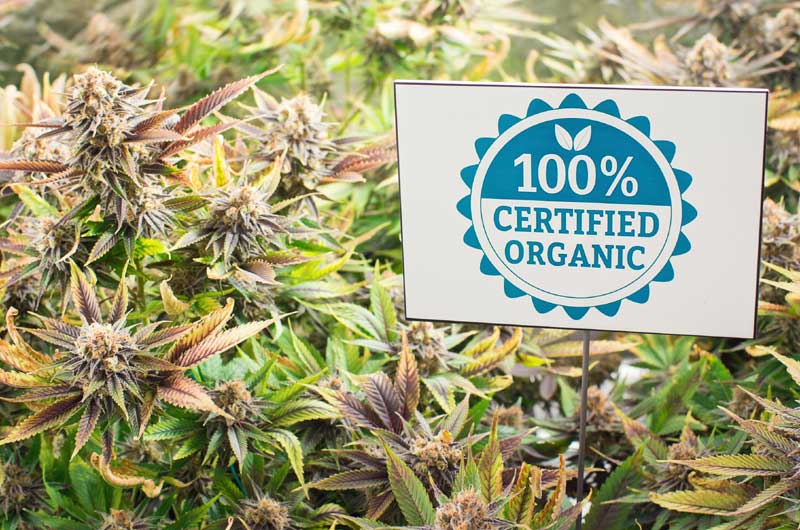
There are now an almost infinite number of cannabis strains with a wide variety of flavours. However, the flavour suffers enormously if you use artificial fertiliser. Even rinsing with clear water during the last two weeks does not give the buds the flavour as with pure organic cultivation. The cultivation of cannabis with "living" organic soil is based on the experience of agriculture, botany and plant physiology. Organic growing differs significantly from cultivation with normal soil and fertilisers. Instead of supplying the plants with unnatural nutrient salts, organic compost creates natural nutrients within the substrate that the plants can absorb and utilise very easily. The cannabis plants therefore grow in an absolutely natural way and can thus develop their complete aroma. Whereas with fertilisers, the grower is responsible for maintaining the pH of the soil and providing the plants with sufficient nutrients, this is not the case when growing with organic soil. Microbes, fungi and other soil organisms protect the roots and provide the plants with exactly the right amount of nutrients. Once the soil is active, the cannabis plants only need to be watered and no additional fertilisation is required.
Advantages of growing cannabis organically
Better smell and taste
Organic cultivation improves the taste enormously and the smell is enhanced compared to the use of artificial fertilisers. The taste of the finished weed is very smooth without any pungency that can be caused by residues of artificial fertilisers in the buds.
100% organic
By using only organic materials in the soil mix, nature can best be reproduced and no flushing is necessary at the end of the flowering phase. As there are no chemical nutrient salts in the soil and plants, there is no need to flush the last two weeks to dissolve and break down the salts as with artificial fertilisers. This also results in grass with a stronger, more intense and much more versatile flavour.
Easier to grow
Once the right microclimate has been created in the soil, organic cultivation is much easier, as only watering is required. Nature will do the rest for you. There is no need to adjust the correct pH and EC of the nutrient solution or to flush the plants regularly.
Disadvantages of growing cannabis organically
Planning necessary
Because the microorganisms first have to multiply and begin their work, freshly mixed soil cannot be used immediately, but needs a few weeks to "mature". You should therefore start mixing the soil that will later be needed for the bio-grow in good time.
Time-consuming for large grows
For large (commercial) grows that require a lot of substrate, mixing the soil can be more time-consuming, even if agricultural machinery is sometimes used. Anyone who has ever mixed 1000 litres of soil or more knows that this does not happen in the twinkling of an eye. For the cultivation of a few plants for your own use, however, it is done quickly and is even fun 😉
The difference between sterile media and organic soil
In an organic soil there is a lively (microbiological) life compared to sterile media in which the microorganisms have been killed by nutrient salts. If you look at this "living" soil under a microscope with a magnification of 300 times, it reminds you of a computer game from the 80s. Strange creatures in various shapes swirl around, some of them swimming aimlessly, others moving forward with small jet propulsion systems and still others pulling themselves from one mass to the next with tentacles. With in little patience, you can see larger creatures eating smaller ones or dividing into identical copies. This is where the microbiological life takes place, which the biology teacher always talked about, although he never informed that these small life forms are the key to lush cannabis harvests.
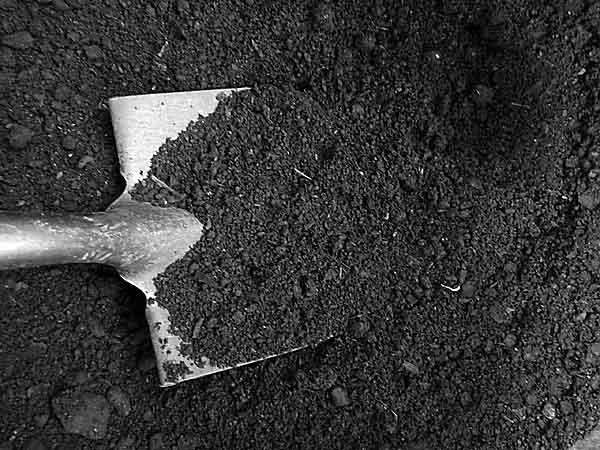
When we think of earth, we tend to imagine a pile of dirt, a brown-black mass of crumbled rocks and rotting plants. But earth is more than dirt: it is the combination of this organic matter plus billions of microscopic organisms. When the earth was formed, these bacteria, fungi and organisms were involved, living on atoms and molecules in their natural environment.
The next life forms to emerge were plants. They evolved in a world rich in micro-organisms and began to flourish in harmony with their natural environment. As the microorganisms "eat" and "digest" chemical compounds to produce energy for themselves, they excrete the waste that plants need to grow. The plants then produce food from it, together with water and light. It is an elegant system in which the waste from one organism becomes food for the next, a cycle that sustains itself without outside help.
In organic cultivation, this cycle is in the foreground. We supply the soil with microorganisms and these in turn supply the plants with the necessary nutrients. When the soil is "alive", it acts as the plant's digestive system: it breaks down the nutrients, transforms them and makes them available to the roots. It is like eating: When chewing, the teeth crush the food, enzymes break it down and in the stomach and intestines it is broken down by bacteria. From there, the nutrients and vitamins enter the bloodstream in a targeted manner and are transported to the necessary places. In living soil, worms and other small creatures break up crumbs of soil, enzymes break them up and bacteria break down the nutrients so that they can be absorbed by the roots and enter the circulation of the cannabis plants.
When fertilising with artificial fertilisers, the decomposition process in the soil is skipped. The nutrients are thereby made available as chelates, these are absorbed directly by the roots without any conversion taking place in the soil beforehand. The "digestion process" is not needed, the soil does not need any microorganisms, these, if present, even die due to the nutrient salts.
Additives for a nutrient-rich soil
Organic additives should be added to the substrate, which are converted into plant food by the microorganisms. Below we have compiled recommended and proven organic substances that are suitable for enriching the organic soil mixture. But it is always good to experiment with different mixtures to find out what is best for your own grow and cannabis strain, a "secret miracle formula" does not exist.
Quantities listed for 100 litres of soil each:
- Fishbone flour, 750g
- Alfalfa, 500g
- Neem seed flour, 300g
- Fish meal (for veg), 300g
- Soy flour (for veg), 500g
- Rock flour, 500g.
- Bark mulch, 300g
- Bat Guano 750g
- Worm dung 3kg
- Epsom salt, 100g
- Powdered mycorrhiza, 100g
- Humic acids, 25g
- Dolomite lime, 100g
- Azomite, 200g
It is not necessary and useful to use all these substances in one mix. A basic mixture should be chosen and then one can experiment with additional substances. A good basic mix consists of fish meal, worm dung, mycorrhiza, lime and humic acid. This mixture must be mixed very well and the microorganisms should be given 4-6 weeks to process the substances. See also our Recipe for the organic soil mixture.
Organic pest control
In organic cannabis cultivation, no chemicals are used against pests such as spider mites, white fly and C0. Their use has a negative effect on the important soil organisms. Therefore, always use natural remedies, or preferably prevent them in the first place. Very good results are achieved with Neem oil.
A recipe for a biological pesticide for spraying
 It is best to mix neem oil (as specified by the respective manufacturer) with lemon peel, mint and chilli peppers and mix this in a food processor together with water and a few drops of washing-up liquid. The leaves of the cannabis plants should be sprayed with this mixture once a week. Never spray the buds, otherwise they can become mouldy and get excessively brown hairs. In the peak phase of flowering, it is better not to spray at all and rather add neem, pepperoni and lemon peel to the watering water.
Aloe Vera - a "protein shake" for the plants
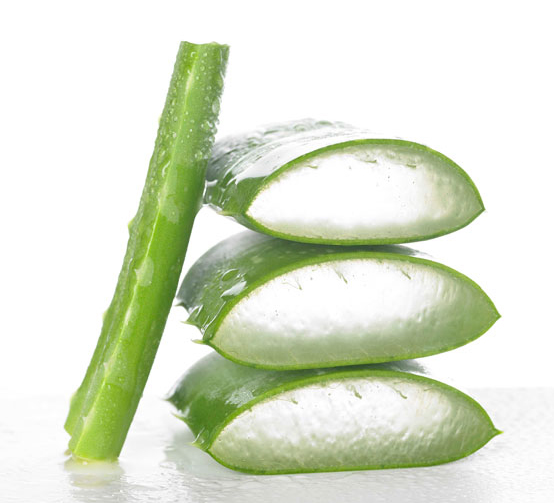 Raw Organic Aloe Vera Juice is an amazing addition to regular watering or foliar fertilisation. In addition once a week 40ml aloe juice with one litre of water and water the cannabis plants with it. Aloe vera is to plants what a protein shake is to an athlete: it provides the body with everything it needs to get bigger and stronger. Just as in the human body amino acids are used to build proteins and proteins build muscles, in plants simple sugars are used to produce starches and these starches form the structure of the plants. Aloe vera juice is full of simple sugars and starches, giving plants the nutrition they need for exceptional harvests.
Coconut water as an organic booster
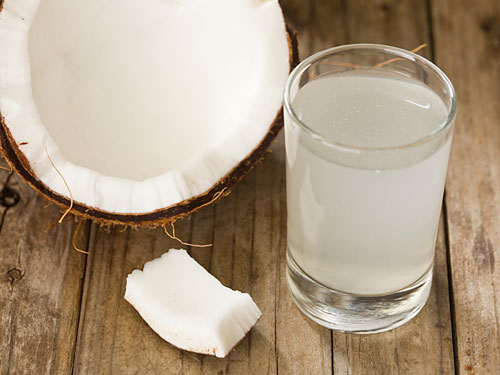 Pure organic coconut water is a real booster for organic growth. The irrigation water is 15ml pure coconut water per litre of water added. The coconut water causes the cannabis plants to grow faster and with shorter internode distances, to become stronger, to form more flower spikes. The coconut is the largest seed on earth - and like all seeds, it contains enough nutrients to keep the plant growing until it has formed enough leaves to sustain itself. Coconut palms grow taller by forming huge palm leaves, which die back and leave behind a trunk. Unlike the seeds of cannabis, which first form a stem from which the new shoots emerge, coconut contains cytokinin, a hormone that encourages plants to divide the cells in the roots and grow, resulting in explosive plant growth above the surface of the soil. In addition, the water of the coconut contains a lot of calcium, magnesium and other minerals and trace elements that the cannabis plants need.
Reuse soil
Reusing the soil after harvesting is one of the most important principles in organic/biological growing. Since the soil is "alive" and contains microorganisms, minerals are constantly being broken down and mixed with the soil substance. Some elements are available for weeks or months, others take several years to break down. By recycling the soil, we give the soil life more time to form these complex compounds, which in turn nourish and protect the plants. The important microorganisms that have formed during plant cultivation are not simply thrown away, but after adding fresh nutrients and some time of transformation, an even more nutrient-rich substrate is available. This is in complete contrast to regular cultivation with mineral fertilisers, where the used soil has to be thrown away and should not be reused.
After harvesting, this is done by emptying the pots into a large tub, mixed with equal parts of neutral soil and compost. After about 6 weeks of waiting, the microorganisms have repopulated the soil and the soil can be used again for growing.
Humus - the source of life
One of the most important ingredients of organic soil is humus, a black, spongy, strong-smelling material that is produced when plants rot. It consists of plant parts that are too hard for the soil and do not decompose in it (e.g. woody parts and waxes) as well as starch and fats that are excreted by the microorganisms. Humus contains a lot of substances and humic acid, which in turn nourish the microorganisms and thus the plants. A recurring cycle of nature.
But humus does even more in the soil. It stores moisture and provides space for oxygen, which the roots and microorganisms need. It stores nutrients and releases them as substances that can be used by the plants. At the same time, it protects the substrate from the nutrients being washed out; it acts practically like a nutrient depot for the roots.
Humus also produces food for microorganisms, vitamins, hormones, natural antibiotics and other elements that protect plants and promote their health.
In addition, humus balances the pH of the soil so that it does not need to be adjusted by the grower.
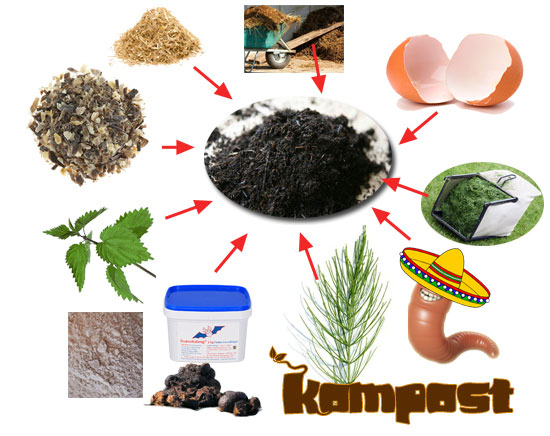
Compost - the precursor to humus
There are many different ways to make compost - composting in a heap, in composters, with worms or black fly. Each type has its advantages and it always depends on what options are available to you. A compost heap in the cellar is rather unsuitable, but with an earthworm farm, for example, you can produce excellent compost there too.
No matter how the compost is made, the goal is always the same: An environment is created in which the organic substances are efficiently converted into humus. This is achieved through the right composition with green material (stems or grass cuttings), brown and yellow plant material (dead leaves), as well as moisture and oxygen.
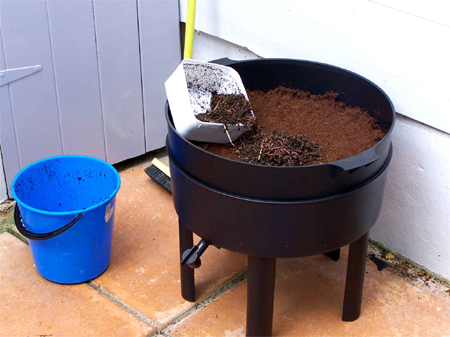
A small worm farm for home cultivation, has space everywhere
Plants for the plants
Another important key element in purely organic cultivation is the use of dynamic accumulators. These are certain plants, usually fast-growing grasses, that absorb nutrients and trace elements from the soil and store them in their leaves. These are placed outdoors between the cannabis plants, when their leaves rot they release the nutrients back to the subrtate.
Thefollowing plants are suitable for this purpose:
- Alfalfa
- Seaweed
- Yarrow
- Comfrey
- Nettle
- Watercress
- Dandelion
- Horsetail
Summary
In organic cultivation, the soil is fed, it is not a "fast food diet", unlike fertilisation with synthetic nutrients, where the plants are fed directly. Organic substances are mixed into the substrate and over time these are converted by the microorganisms into food that can be used by the plants. This living substrate provides the perfect environment for vigorous root growth, which in turn leads to more robust plants and stronger disease resistance.
Another advantage of growing cannabis organically is the better potency of the end product. The full spectrum of smells, aromas and tastes are produced in the weed. Weed that has been grown organically has more trichomes and a higher terpene content, which is evident not only in a stronger aroma, but also in a smooth, non-irritating smoke. Other advantages are less work and lower costs due to regular fertilising, the pH value does not have to be constantly controlled and the waste water is not polluted with chemicals. In addition, the soil can be used again and again, which is also more inconspicuous as it does not have to be disposed of.
Growing cannabis organically is a wonderful thing that offers many benefits and is especially important in the medicinal use of cannabis.