
Blog
Hydroponics, Aeroponics, Aquaponics - Part 1: Basics
Hydroponics, hydroponic systems
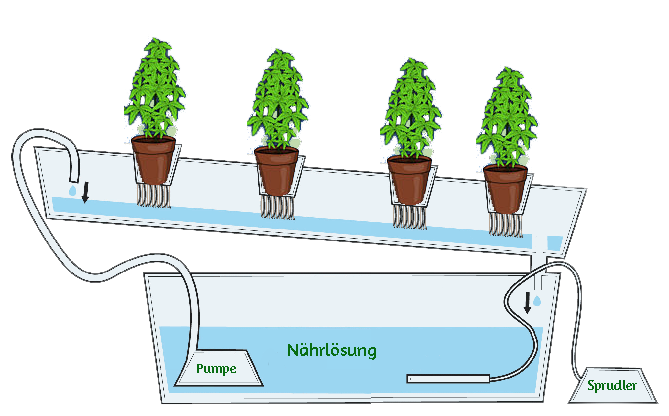
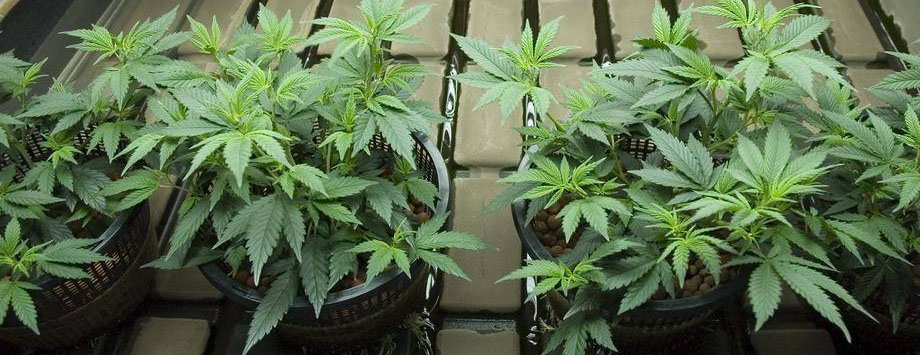
Hydroponics is now an established branch within argragic science and is not only used with great success in the cultivation of cannabis. Numerous vegetable and fruit varieties are now cultivated commercially with hydoponic systems and corresponding large-scale facilities. In the field of hydroponics, rapid progress has been made in various countries and the results of this method speak for themselves. Hydroponics is superior to conventional cultivation methods in many respects.
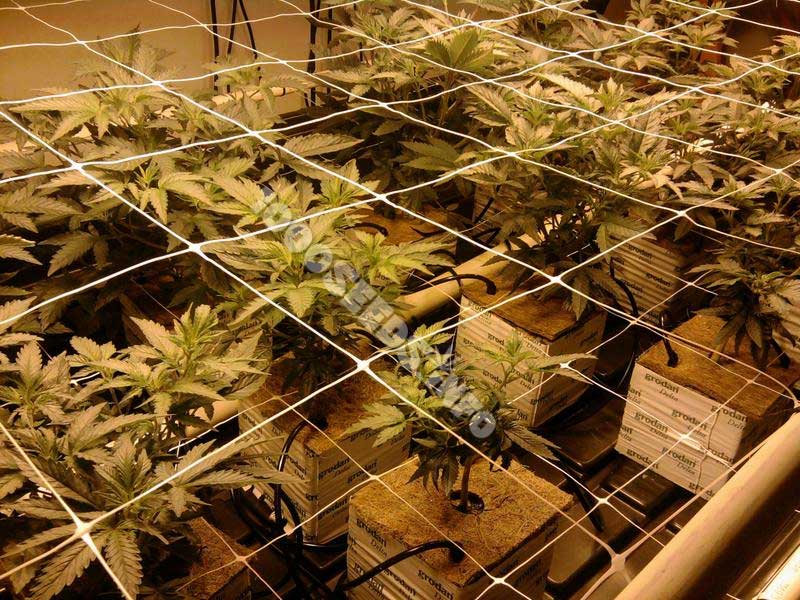
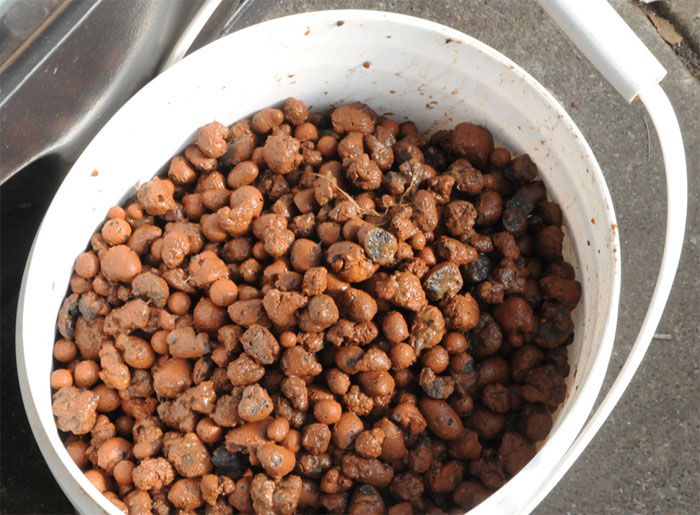
Hydroponics is a method of growing plants that uses a water-mineral solution instead of soil. The cannabis plants are grown so that their roots are either only in a watery solution of mineral nutrients or in a medium such as perlite, Rock wool (blocks), Expanded clay or Coco substrate.
Advantages of cultivation with hydroponics

Hydroponics is also used in food production worldwide due to its many advantages:
- the nutrient content or the nutrient supply can be controlled directly and optimally
- yields are higher than with other growing methods: many growers report that plants grow faster in a hydroponic system, ripen faster and can be harvested earlier accordingly
- no soil is needed
- Pests and pathogens can spread less and are much easier to control than when growing with soil
A hydroponic grow requires good preparation, some background knowledge and regular close monitoring. If some important points are not observed or not observed correctly, the higher yields will not be achieved. Hydroponics requires a certain amount of time, which is the only way to achieve higher yields. Those who prefer less effort, do not want to invest so much money and still have little experience will certainly achieve better results with soil as a medium. Hydroponic systems are mainly suitable for the experienced grower who is already well acquainted with plants, their needs and diseases. Hydro hardly forgives "irregularities" such as over- or under-fertilisation.
First of all, it makes sense to get an overview of the available options and methods. Then one can better decide for oneself which variant is the most suitable and which can be implemented best.
Especially important with a hydroponic grow
- adhere precisely to the corresponding parameters
- Keep an eye onph-value and EC-value and check daily
- Absolute cleanliness: always and constantly cleaning is enormously important: Growroom + System
- all water-bearing connections must be absolutely tight to avoid water damage
There are a variety of different hydroponic systems and methods available
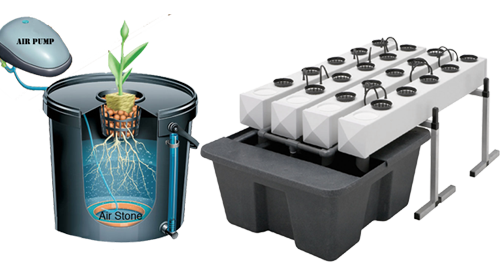
- as ready-made kits or self-made systems
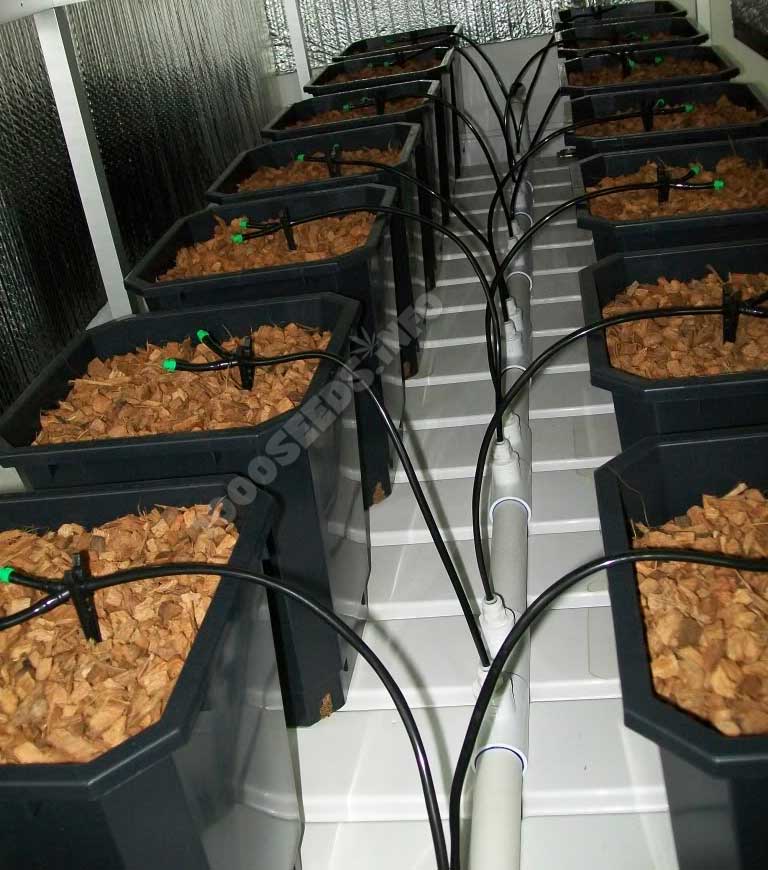
- on rock wool, coco, perlite, hydrocorrels (bea clay), vermiculite or other hydroponic planting media
- NFT Nutrient Film Flow Technology
- Aeoro- and bioponics: Cultivation without medium
- Drip irrigation systems
- Ebb, flow systems
- Deep-water systems
- Systems in which the nutrient solution is used again and again(recirculating systems) and systems in which the nutrient solution is not used again after it has passed through the system(drain-to-waist).
- There are two main variants for each medium: subsurface irrigation and surface irrigation.
You will learn more about the individual methods later in our hydroponics series when we go into more detail about the individual systems.
pH value in hydroponic cultivation
The pH value is described as "soft" (0- 7), "medium-hard" (7-14) or "hard" (14-21). The hardness of the water depends on the lime content and in turn also influences the pH value and the nutrient absorption capacity of the plants.
If the nutrient solution is brought to the desired pH value of 5.5 to 6.0, this does not change the lime content. Too much lime in the water means that the plants cannot be optimally supplied with nutrients, even if there are enough of them in the nutrient solution. Tap water that is too hard should be mixed with soft water. You can use either osmosis water or rainwater for this. Rainwater should be filtered because otherwise impurities such as insects (eggs) or fungal spores can be introduced. The exact mixing ratio depends on the tap water you use.
Ideal pH value for the nutrient solution = 5,5-5,8
An EC value of 0.2-0.3 mS after mixing is ideal for the plants.
If this is too inconvenient for you and you still want to grow with hard water, you should make sure to use a fertiliser for hard water. Some manufacturers offer special fertilisers for this (e.g. GHE).
ideal EC value for the nutrient solution (after mixing) = 0.2-0.3 mS
-> continue to: Hydroponics, aeroponics, aquaponics - Part 2: Cultivation on hydrocorrels (expanded clay)
<<mehr Grow Tipps im Growlexikon>>