
Blog
European study: What is the best cannabis oil extraction method?

Cannabisextrakte werden bereits seit langer Zeit für die Behandlung verschiedener Symptome eingesetzt und ihre Beliebtheit hat in den letzten Jahren ständig zu genommen. Letztes Jahr hat eine Gruppe von Forschern der Universität von Siena (Italien) und Leiden (Niederlande) eine Studie abgeschlossen mit einigen der bekanntesten und beliebtesten Extraktionsmittel, um zu sehen wie diese abschneiden. Das Ergebnis wurde in der Fachzeitschrift „Cannabinoids“ veröffentlicht.
Extraction agents for cannabis assessed from a scientific point of view
Rick Simspon became very well known in the media with his oil. He advocates the use of petroleum ether and naphtha for extraction, for which he received much criticism. The problem is not that these two substances are not suitable as solvents, rather they pose an unnecessary health risk to patients. As Dr Luigi L. Romano, lead author of the well-known European study, points out, petroleum ether and naphtha are mixtures of various hydrocarbons (benzene, hexane, etc.). These substances are each rated as carcinogenic and are also labelled as such in the safety data sheet provided by the manufacturer.
There are a variety of alternative extraction options that have become increasingly popular in recent years. Some are intended for inhalation (butane, CO2, propane gas) and others for oral ingestion (olive oil, coconut oil, ethanol, etc.). Not surprisingly, each substance reacts differently as a solvent, the end result, i.e. the cannabis oil, is highly dependent on the particular production method and solvent used.
Different extractions were carried out when testing four different solvents - benzine, petrol, ethanol and olive oil. Subsequently, the final product was tested in the laboratory for its cannabinoid and terpene content. It had been shown that the concentrate produced from naphtha on the one hand had a lower content of terpenes, but on the other hand had a higher THC value than the other extracts.
Ethanol and olive oil turned out to be the most effective solvents, mainly because of their ability to produce an extract with a high terpene content. More importantly, both substances are suitable and safe for human consumption.
Recipe for making medicinal cannabis oil with olive oil
Cannabis olive oil works even better than cannabis butter and is especially suitable for medicinal use.
Ingredients:
- 28 g dried, high-quality cannabis flowers
- approx. 3.5 cups olive oil (medium size)
Manufacture:
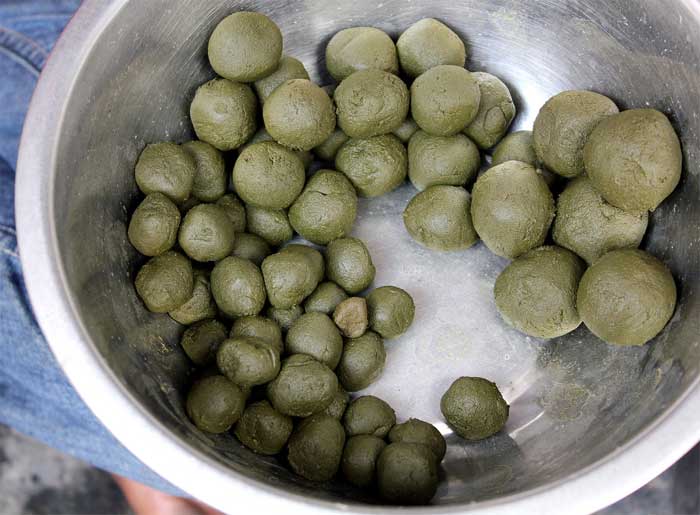
Heat the oil in a saucepan until just before boiling point and then remove from the heat. Now add the finely chopped cannabis flowers and stir several times. (The mixture should not boil, otherwise too many cannabinoids and terpenes would be destroyed). Cover this mixture and leave it to cool in a cool place, wait a few hours, stir again and then sieve everything so that the larger parts of the plant are filtered out. Pour into a bottle and then store in a dark and cool place. Preferably in the refrigerator.
Cannabis Oil: chemical evaluation of an upcoming cannabis-based medicine, Luigi L Romano, Arno Hazekamp, Department of Pharmacy, University of Siena, Italy, Plant Metabolomics group, Institute of Biology, Leiden University, The Netherlands
see also: Making cannabis tinctures
<<mehr zum Thema Cannabis als Medizin>>