
Blog
Cannabis Tinctures Backgrounds & Production
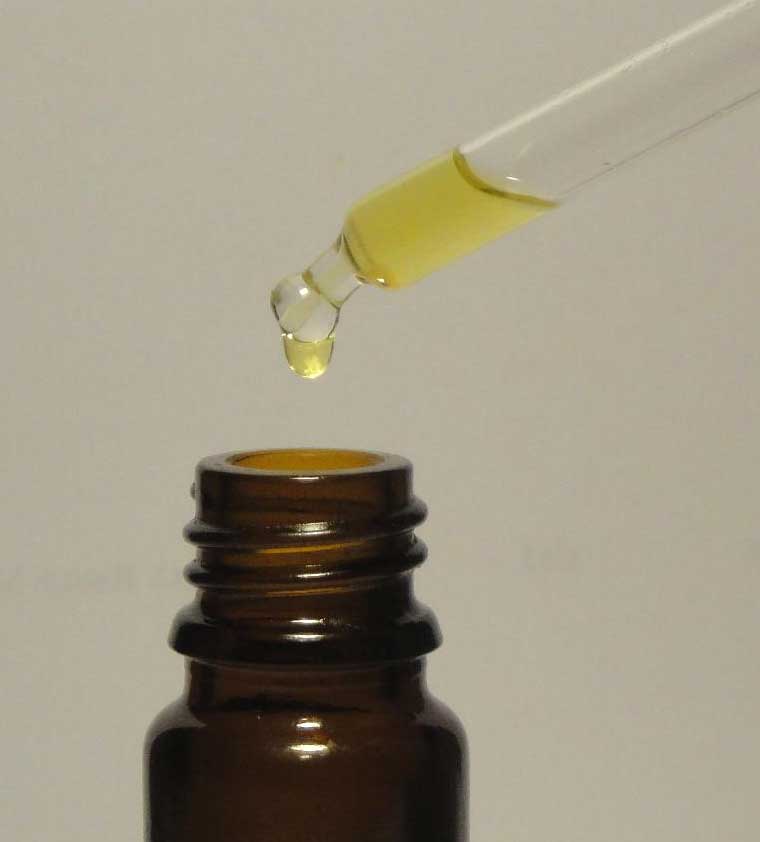
Smoking cannabis has the advantage that the effect is immediate and the patient has the possibility to adjust the dosage according to individual needs. But smoking in itself naturally has some undesirable side effects or is out of the question for some patients. With tinctures it is possible to feel the effective effects similarly quickly and at the same time you have a high degree of control over your own required dose. There are now many alternative and effective routes of administration to smoking.
"Pharmaceutical pills" already provide the benefits of cannabis or individual cannabinoids today and will certainly do so increasingly in the future. However, the present drug dronabinol (Marinol) has often achieved only unsatisfactory results due to its delayed action time, poor absorption in the digestive tract and the lack of many antioxidants present in whole cannabis, as well as the additional non-existent anti-inflammatory cannabinoids. In addition, all of these cannabinoid drugs will have very high dispensary prices in the future and may also have side effects that are not known with the conventional use of whole cannabis. Yet the simple is often so obvious. In countries where cannabis cultivation is already legalised, patients can easily and safely produce their own medicine from cannabis without fear of repression or having to resort to expensive pharmaceutical products.
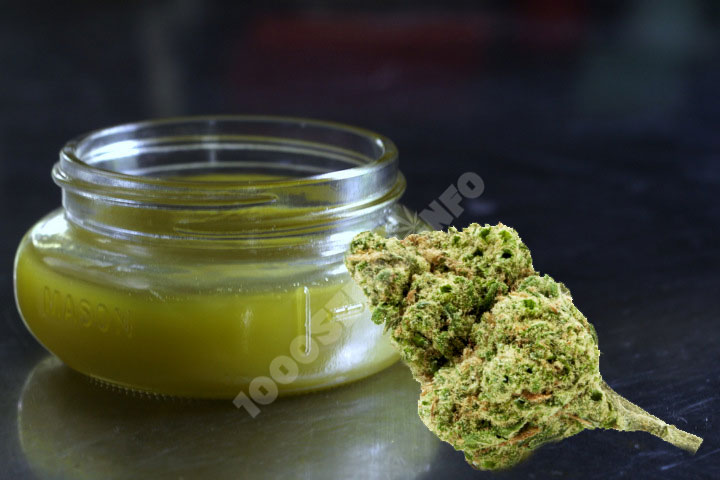
Cannabis tinctures are nothing new. In earlier times, they were used in medicine as the primary form of administration. Cannabis tinctures are essentially alcohol extractions of the whole cannabis, i.e. the flowers and possibly the small resinous leaves. They are easy to produce and extremely cheap compared to cannabinoid preparations. In addition, the tinctures contain all 80 of the essential and so far known cannabinoids instead of only one such as marinol. Some cannabinoids, such as cannabidiol (CBD), reduce the psychoactive effect of THC while increasing other effects. The interaction of the different cannabinoids in their natural form is undoubtedly of great importance, especially in medical applications, and needs to be explored more in the future. Throughout cannabis, cannabinoids support, regulate, and complement each other. Isolating and administering a single cannabinoid therefore does not seem to be as effective as the whole cannabis, according to current knowledge, and undesirable side effects have also been reported in the context.
[click on the image to enlarge]
Tinctures can best and most effectively be used sublingually (i.e. under the tongue). The dosage and potency can be easily determined by the number of drops per patient. Under the tongue, the cannabis medicine is then rapidly absorbed into the arterial system and transported to the brain and throughout the body. Tinctures are best kept in the refrigerator and in dark bottles because light can destroy certain cannabinoids and other active ingredients. Due to the high ethanol content in cannabis tinctures, there is no need to fear bacterial contamination.
When smoking or vaporising marijuana, the active cannabinoids begin to take effect in the body within seconds. Due to the fast onset of the effect, the patient can easily control the dosage and only needs to wait a few minutes between individual puffs. When cannabis is taken orally, e.g. in the form of marijuana biscuits, it is absorbed in a completely different way than when smoked. The body gradually absorbs cannabinoids within about 1-2 hours. The drug is first processed by the liver when taken orally, where some cannabinoids such as the delta 9-11 versions of THC are converted. When cannabis is eaten, it takes about 4-10 times the amount compared to smoking or vaporising to get the same effect. It is often difficult to consistently achieve a desired dose or effect when taken orally. Therefore, tinctures have been developed to allow an equally fast and at the same time easily dosed application. As already described, most tinctures are used sublingually.
An English pharmaceutical company is currently working on a spray that can be used in a similar way under the tongue. In many countries, however, it is not expected that such a cannabis spary will be available to patients in the foreseeable future, as often the approval process for medicines takes years and they also end up being very expensive. Under the tongue, the active ingredients of the tincture can also be absorbed within seconds through the arterial blood supply. The tincture is not swallowed. When the tincture is put into a drink, the active ingredients are absorbed more slowly than under the tongue. Absorption is faster with an empty stomach than with a full one.
Many patients take 3-4 drops for a single dose, although this is difficult to specify. The dosage depends very much on the cannabis used and the potency of the tincture, as well as on the individual factors of each patient. Every person is different. Therefore, many patients first feel their way to the dose and test different strains to find their individual, ideally matched dosage and medicinal strain. Tinctures are best dosed with a dropper.
In the following, we will go into more detail about two methods for producing medicinal cannabis tinctures. Both methods aim at the purity and potency of the end product. In this context, it is particularly important for medicinal use to use high-quality cannabis as the starting material, which is free of chemical additives and residues as well as mould and other pathogens. Depending on the area of application and desired effects, it is of course a prerequisite to choose the appropriate strain accordingly. For some diseases, classically Indica dominant strains have proven themselves, for other symptoms, Sativas are better suited. See also Indicas in medicine or the Cannabis strains and their medicinal effects.
Because the spectrum of effects and the interaction of the canabinoids in the different cannabis strains is so varied and different, cannabis patients ultimately have to test for themselves which strain or strains are the most suitable for their needs. Many cannabis patients use different strains with different ranges of effect, and have very good experiences with them.
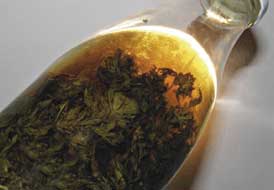
General rules for the preparation of cannabis tinctures
Cannabis tinctures represent an extraction of cannabinoids from plant material.
- Many cannabinoids react negatively to light or heat and break down in the process, so this should be avoided if possible. Tinctures should be stored airtight in Dark glass containers stored in the refrigerator.
- Plastic containers should be avoided because the ethanol in the tincture can dissolve parts of the vinyl in the plastic and would therefore be harmful to health.
- All equipment and vessels should be well cleaned and disinfected beforehand to avoid introducing germs into the tincture.
Method 1: cold method
This recipe is for producing tincture of the highest quality. No heat is used in the process and the cannabinoids are therefore largely spared and preserved. The flowers and small leaves should be crushed beforehand, but not pulverised. Larger leaves can also be used, but if you want to achieve the highest potency, take flowers of the highest potency. The alcohol should be suitable for consumption, you can also use the highest percentage vodka you can buy or rum with 80%.
- Fill a sealable glass jar 3/4 full with dried and crushed flowers and/or resinous small leaves.
- then fill up the rest with at least 80% alcohol (it must be alcohol suitable for human consumption!). Make sure that there is still some space left in the top of the container.
- Shake well and then shake 1-2 times a day for 2 weeks. During this time, as well as afterwards, store in the refrigerator.
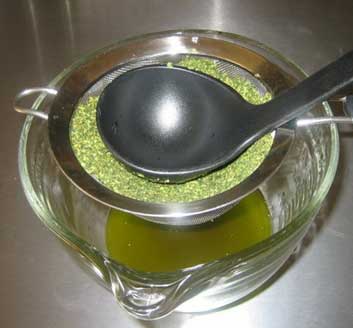
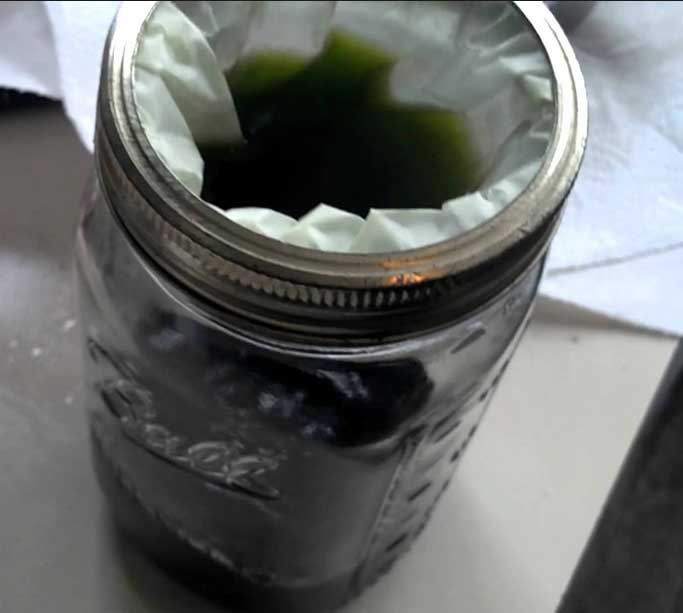
- After 2 weeks, filter the mixture through a fine tea or cloth sieve. This can also be repeated a second time so that suspended particles are filtered out even better.
- Put the tincture into a dark glass bottle.
Alcohol is a strong disinfectant for some time. When handling the cannabis tincture, one should be respectful and not overdo it, because it is a concentrate.
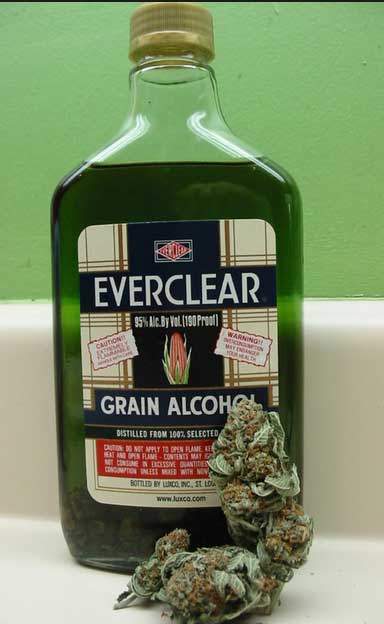
Method 2: hot method (decarboxylation)
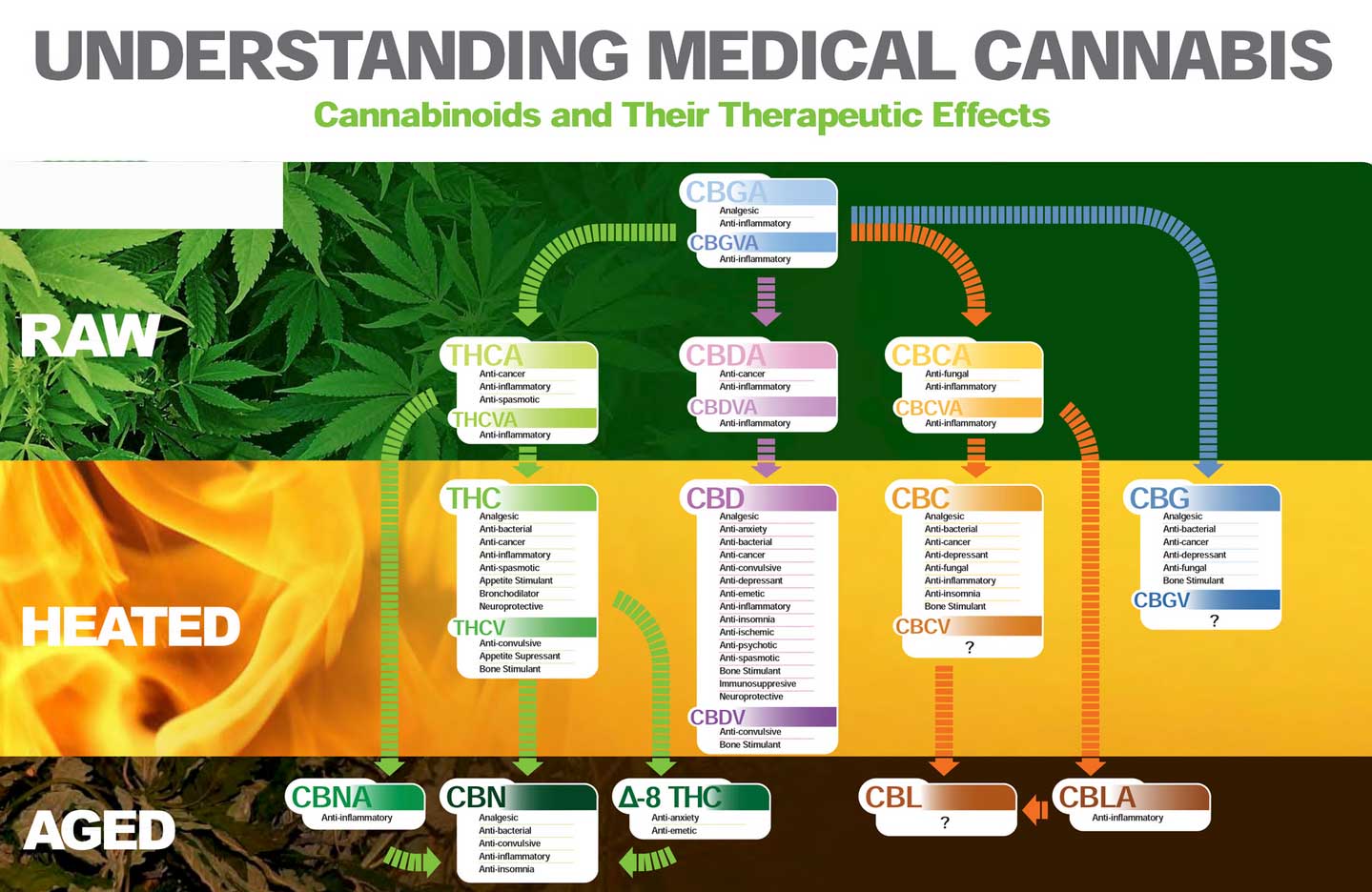
In the cannabis plant, the THC content appears in the form of THCA (tetrahydrocannabolicacid). THCA is then converted into THC when boiled (heated), vaporised or smoked -> called decarboxylation. THCA is a mild painkiller with anti-inflammatory effects. However, it has no affinity to our CB1 receptors, so the THCA must first be converted to THC to produce a THC-rich tincture with the same therapeutic and high effects as smoking. THC vaporises at 190 C°. Therefore, if THCA is to be converted to THC during heating, the tempretaur must be kept below this so that none of the valuable THC is lost. In this context, it should be noted that there is sometimes considerable misinformation about the heating of cannabis. It is true that the cannabis does not need to be heated to extract both THC and THCA, but the amount of THC is relatively small when not heated compared to after decarboxylation of the THCA. So, if the strength of the tincture is to be maximised, the cannabis must be heated before extraction.
- The cannabis is heated to a temperature of 160 C°. To do this, simply place the cannabis in a preheated oven (160 C°) for 4-5 minutes. It starts to smell strongly during this time.
- Then chop the cannabis very finely.
- Very high-proof alcohol is used for the extraction (e.g. Bacardi 151 also suitable for consumption in any case).
- Now comes the point where opinions differ the most. Some people put the cannabis in alcohol for 2-6 weeks, while others swear by mixing the alcohol with the flowers, soaking it for 2 weeks and then heating it again. The main problem with heating alcohol is that alcohol is flammable. Some patients heat the alcohol mixture because this increases the efficiency and extraction rate. Heating during the extraction process increases the movement of the molecules and thus significantly shortens the extraction time. The boiling point of pure ethanol is 78 °C. The water bath has proven to be the best way to heat the cannabis mixture (rum mix) to just below the boiling point of ethanol. A thermometer should be used to control this. While the cannabis-alcohol mixture is in its glass container in the water bath, it should be covered with a glass lid.
- Place the thermometer in the preserving jar to check. If the water in the water bath starts to bubble too much, lower the temperature and remove from the plate. Ensure that the room is well ventilated and that the extractor fan is set to full strength. Allow the mixture to "simmer" for a few minutes (about 30 minutes), but do not boil.
- The mixture is now also filtered through a fine sieve again and stored in a dark glass bottle in the refrigerator. The tincture is dark green and smells intensely of marijuana.
That's it, chilly greetings. See you next time 😉
[fblike style="standard" showfaces="false" width="450″ verb="like" font="arial"] [fbshare type="button"]
<<mehr zum Thema Cannabis als Medizin>>