

Blog
Dry extraction - how do I make high-quality hashish myself?
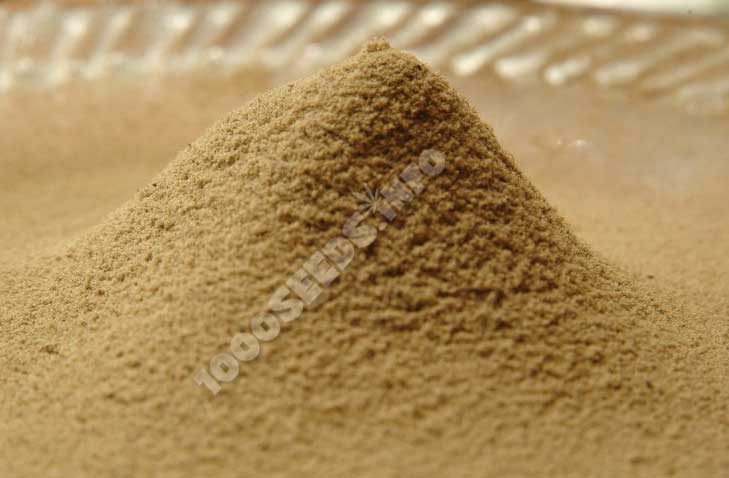
Dry extraction, i.e. separating the resins from the remaining plant parts, is the oldest extraction method for cannabis. In this process, the flowers / plant material are shaken through a sieve. There are various devices for this, from the simple Handshaker, to 00-Boxesthe Tam-Tam to the rotator. All variants work in the same way. However, in order to produce high-quality hashish, there are a few things you should be aware of beforehand. Here we will briefly go into them.
What is to be separated from the other parts of the plant during extraction are mainly the trichomes. These occur in different types in cannabis, you can find out more about them at The trichomes of cannabis. In the production of hashish, it is mainly the trichomes with head and without style that are interesting for us. These have a size of about 70 to 100 µm. In the screening process, these are the ones that should be separated to obtain dope of the best quality.
However, besides trichomes, there are a few other things to keep in mind when extracting. As we explained in the Phenotype / Genotype each genotype is a universe and each phenotype is a small planet in it. It is always easy to produce high quality concentrates from clones. Each phenotype has its specific type of resin, which is only influenced by a few factors, such as the harvest. If you now use the resin of the same phenos, you get a very homogeneous end product. Which mesh size gives the best result is different and always depends on the phenotype and whether it was grown outdoors or indoors, which substrate and fertiliser was used, etc.
Another important aspect in the production of high-quality extracts is the range of terpenes. Cannabis plants possess about 130 terpenes. These very aromatic substances have a direct influence on the organoleptic quality (how much they stimulate the senses) of the buds and consequently also on that of the hashish produced.
During dry extraction, the separation of the resin droplets from the plant material, different sieves with different mesh sizes can be used, each sieve allows a different trichome size to pass through, thus obtaining different qualities in the resin sieving.
When we talk about quality and purity, by purity we mean the maximum concentration of carved capitate trichome heads with as few smaller trichome heads, trichome stems and plant material as possible. Normally, the purest hashish has the best quality, both organoleptically and in terms of cannabinoid concentration. However, it can be the case with some phenotypes that a mixture of the best and second best sieving results in the highest quality hashish. This is because the 2nd strain contains more terpenes in some strains, and therefore has a better sensory response. Recent studies have shown that terpenes have a great influence on the effect of cannabis and interact with cannabinoids. Read more at Terpenes in cannabis.
Of course, the purity of the source material also affects the quality of the end product. Many "other substances", such as dust, soil, small insects and their excrements, etc., that are found in the plant material contaminate the hashish and lead to a lower quality. You get the absolute highest quality hash from high quality buds!
How do you achieve the best hashish quality?
As explained above, the best quality is obtained by making the end product as pure as possible. There are some machines for dry extraction in which a drum rotates, these also produce very good hashish, but the drum is covered with sieves with 132 or 160µm, so that all particles smaller than 160 micrometres (or 132) end up in the dope. However, the best trichome heads are larger than 70µm and should be separated from the rest of the material. Therefore, you should do 3 sieves with 3 different mesh sizes - 160, 70 and 45µm. For this purpose we use special sieves or the bags from the Bubble bags, which are stretched over a frame.
First, with the 160 width, the plant material is separated from the resin, a hash with all the resins is created. Then this material is sieved through the 70µm mesh. All resins that do not fit through this sieve are the best trichome heads, it is the best quality hash. Then the smaller resins are sieved through the 45µm net. The material left behind is between 45 and 70 microns in size and is 2nd grade hashish. Any particles that have fallen through the sieve can be pressed into 3rd quality hashish.
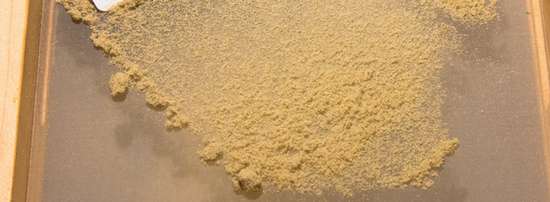
As we have already noted, in some strains the 2nd screening is more aromatic and contains more terpenes than the best and strongest extraction. By adding a certain amount of the 2nd quality grade to the first, the aroma and also the potency can be improved again. You have to try for yourself what gives the best results.
For the extraction, the plant material should first be frozen in the freezer for 24 hours. This makes it easier for the resins to separate from the rest of the plant material.
Drying, pressing, storage
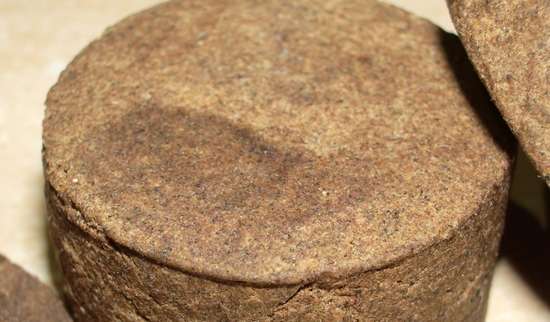
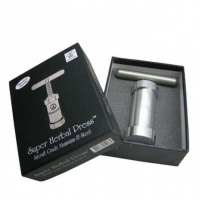 What many people don't know is that just as cannabis is dried after harvesting, the hash obtained through dry extraction should also be dried again. This makes it easier to press the resin and gives the dope a better aroma. To do this, the extracted resin powder is stored in a plastic lid with a lid for 3-4 days and the lid is opened several times a day, just as you know it from fermenting the buds.
Care should be taken when pressing dope with a hashish press. Although pressing prevents the oxidation of the resins and the hash stays fresh longer, pressing too hard causes the trichome heads to burst and the terpenes to escape - so always press the hash with "feeling"!
The biggest "enemies" of hashish are light and air, these lead to a breakdown of the cannabinoids, so the best way to store it is in the fridge in a lockable box.