

Blog
Anomalies and mutations in cannabis plants
Growing cannabis presents some challenges to the grower. From choosing the right seed to setting up the optimal conditions for a strong and beautiful plant, there is a lot of work to be done first. When the first results are seen, it is certainly disconcerting to suddenly notice anomalies or even mutations in a plant.
In most cases, however, unusual changes in the seed are no cause for alarm. Some of the best-known cases of mutation are even highly desirable. Ducksfoot strains, for example, have become a popular outdoor variety in the last 10 years because their leaves are not recognisable as cannabis plants to prying eyes. The whorl-leaved pyllotaxis can also be desirable for many growers, as it produces several shoots on the same part of the stem, making the plant grow much bushier.
So in the following we want to give an overview of the consequences and appearance of the most common anomalies and mutations. We will also explain whether they are harmful or perhaps even prove useful.
1. the Ducksfoot mutation - a stealth variant
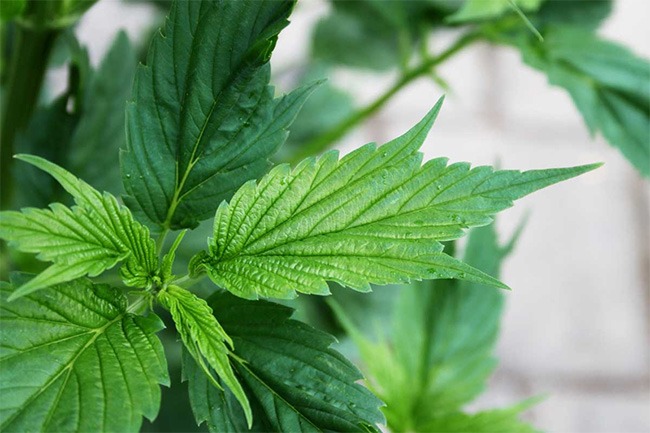
Die Ducksfoot-Mutation wurde erstmals von einem Australischen Züchter entdeckt und dann gezielt weiterentwickelt. Da sie über die Jahre zu einem echten Verkaufsschlager geworden ist, handelt es sich bei ihr um die sicherlich wichtigste Mutation. Während die Blätter der üblichen Cannabispflanze die typische Fingergliedrigkeit aufweisen, haben diejenigen der Ducksfoot Mutation in der Form von Schwimmfüßen. Damit sind sie für unerfahrene Betrachter kaum als Cannabispflanze zu erkennen. Diesen enormen Vorteil machte die auf dem Ducksfoot basierende Sorte „Frisian Duck“ des bekannten Holländischen Seeds-Anbieter „Dutch Passion“ auf Anhieb zum Publikumsliebling unter den Outdoor Sorten.
Due to the natural camouflage provided by the unusual shape of the leaves, people walk straight past this plant without a second glance. People who have never grown cannabis before grow this strain in their garden, greenhouse or backyard. If you grow this variety in fields, hills and forests, it is unlikely to be recognised. Without the distinctive cannabis leaf shape, people fail to perceive the cannabis plant as such. This is a groundbreaking development for outdoor growers, especially those who like to grow cannabis in and around busy areas."
In addition, the plant has a high resistance and at the same time delivers a very large yield of up to 500g per m². The aroma of the flowers is also not particularly pungent, so that the plant emits a comparatively weak odour even during the flowering period.
2. albinism and polychromy - variety in plants
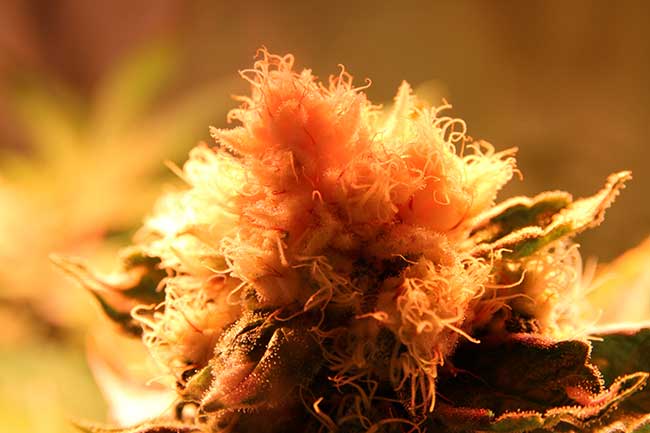
If the leaves and flowers of the plant are not green but have other colour values, there is a so-called variegation (lat. variegare = to make more varied) or variegation (frnz. panacher = to mix). The reasons for this can range from albinism and the well-known purple varieties to mineral deficiencies.
Albinism describes the lack of pigmentation in the plant. Just as melanin is responsible for the colour of the skin, eyes and hair in humans, the plant gets its rich green from chlorophyll. If the plant is an albino, it lacks this pigment and develops a partially or even completely white leaf, stem and flower.
This variation is genetically determined. However, the effects are not only limited to the appearance of the plant. While normal plants convert light energy into glucose via chlorophyll, an albino lacks this energy source. This means that the growth will generally not be particularly stately, which will result in, among other things, a decreasing yield. In the worst case, the plant will also try to compensate for the missing nutrients through its root system. In this way, it extracts an excessive amount of nutrients from the soil.
However, as the albinism can be a highlight in a grower's collection due to its peculiar appearance, the fate of the plant has to be weighed up. Due to the low yield, one should certainly be able to afford the cultivation. Moreover, many albinos develop poorly or even die earlier because they cannot feed themselves sufficiently.
Caution: A white plant or white parts on cannabis plants do not necessarily indicate albinism. It may well be that the leaves have been placed too close to an artificial light source. In this case, the pigments of the plant are simply burnt off. Lamps that are too bright also have a damaging effect and can cause the leaves to lose their green colour. Here it is important to be well informed in advance about the ideal distances and light intensities. White tips on cannabis plants occur particularly often with very potent LED lamps, when the distance to the lamp is too close.
Purple, red and blue tones are created when cannabis is planted in colder regions with shorter light cycles. Then, a plant pigment called anthocyanins, found in almost all plant species, is activated opposite the pigment chlorophyll. This property has been specially bred into the well-known Purple varieties in particular. Famous examples are for example:
- Purple #1: Purple #1 came on the market in the 80's and with its THC content of 12% was considered the strongest of the purple strains for a long time. Yet its aroma and taste is rather unobtrusive.
- Purple Haze: This well-known strain was named after the song by Jimmy Hendrix because of its colour and descent from a Haze strain. The high is considered deep and euphoric.
- Twilight: This outdoor strain is best known for its intense purple colouring and a strong, invigorating high. It is also popular for medicinal purposes.
- Purple Lemonade and Purple Domina are popular purple-coloured autoflowering strains with high potency and good yields.
Creamy white to yellow or even brown leaves can most likely be traced back to a magnesium deficiency. This can occur, for example, if the plant is watered too often. The nutrient contained in the soil is then washed out with the water and can no longer be absorbed by the plant's roots. In addition to optimised watering, a remedy for this is a Magnesium fertiliser.
3. the whorled-leaved pyllotaxis
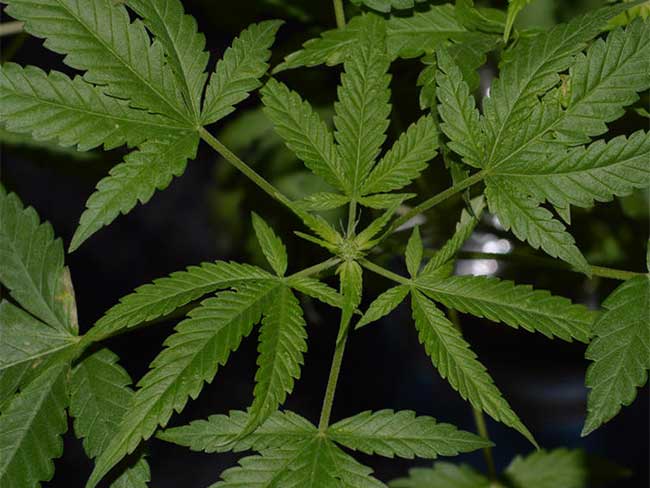
The botanical term pyllotaxis describes the arrangement of the leaves on the stem of the plant. This arrangement is usually alternate. This means that the leaves of the plant are always opposite each other and this leads to a symmetrical and regular growth.
In the case of opposite pyllotaxis, on the other hand, two leaves sprout from the same stem position. It is surpassed by the whorled-leaved phyllotaxis. Here, several leaves grow from the same point. Plants affected by whorled-leaf phyllotaxy therefore become particularly bushy and can even produce larger yields. Accordingly, the mutation should be sought after among breeders. Although it occurs relatively often, it has unfortunately never been possible to breed a strain with whorled-leaf phyllotaxis. Rather, it simply disappears from one generation to the next. This makes it almost a matter of luck.
4. leaf buds - only advantageous at first glance
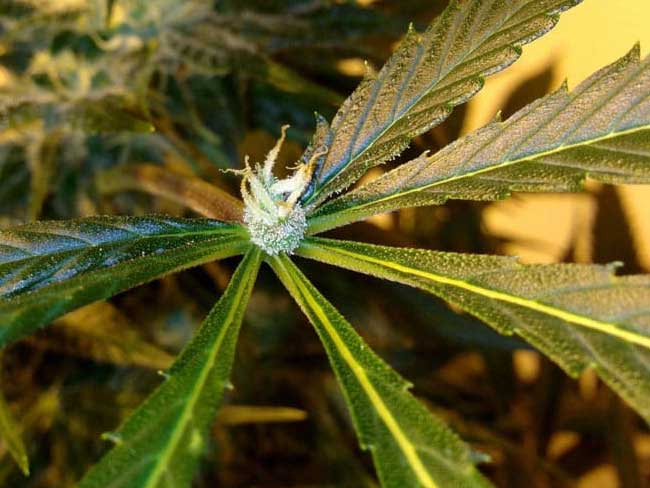
At first glance, leaf buds also sound like something you would like to observe on your plant. After all, who wouldn't like to have a yield that goes beyond the usual inflorescence on the leaf stalk?
When the leaf buds appear, the plant also starts to form a flower on the shoot of the leaves. What sounds great at first, however, is usually not advantageous in practice. For example, the leaf buds will turn out to be much smaller than their normally grown and larger siblings. Because they also take nutrients away from the other flowers, specimens with this mutation are usually discarded by the breeder.
5. polyploidy - the Frankenstein of mutations
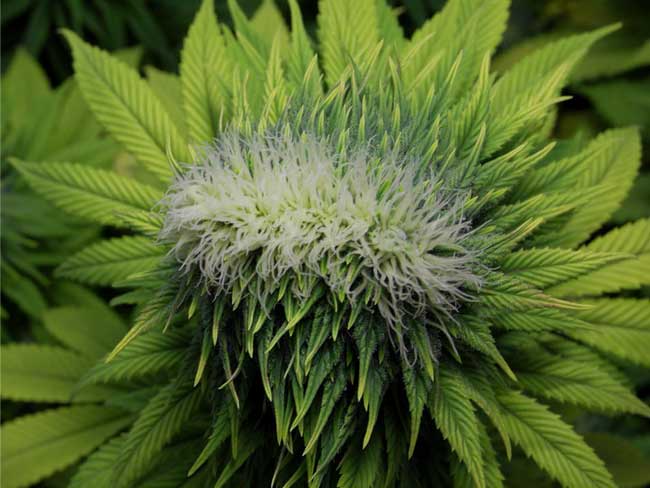
A mutation achieved by man through breeding is polyploidy. It affects the distribution of the plant's chromosome pairs. Like humans, the cannabis plant has 46 chromosome pairs, with 23 chromosomes each inherited from the mother and the father. In polyploidy, these pairs are increased up to double or more, which should result in an increase in plant vigour. These often become higher, and the yield and potency of the cannabis is also increased. In return, one has to reckon with a sometimes bizarre appearance of the plant.
In the course of the partial legalisation of marijuana, more and more research is being done on this type of mutation. Under laboratory conditions, this is a laborious and costly task. In the cannabis scene, experiments are often carried out with the chemical colchicine to breed polyploid cannabis. For this, the seeds of the plant are soaked in the agent for about 8 - 24 hours. The colchicine stops the cell division of the plant during this time, which forms several sets of chromosomes as a reaction.
In the course of this far-reaching intervention in the genetic structure of the plant, however, only a few plants survive. In addition, colchicine is only available on prescription because of its toxicity. In general, therefore, chemical treatment of the seeds is not recommended.
6. twin seedlings - unequal siblings
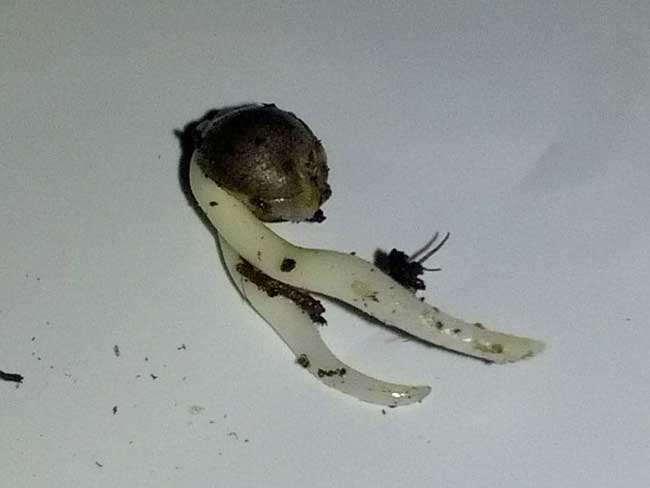
If two plants sprout from one seed instead of one, this is called a polyembryonic seed or twin seedling. Unlike human twins, however, one of the two plants will be the exact clone of the mother. Unseparated plants will hardly produce handsome specimens. Conversely, the two plants should not be separated too early. A height of about 20 - 25 cm is recommended in order to separate the plants carefully. When the twins have been successfully planted apart, normal growth can be expected.
7. three-leaf seedlings
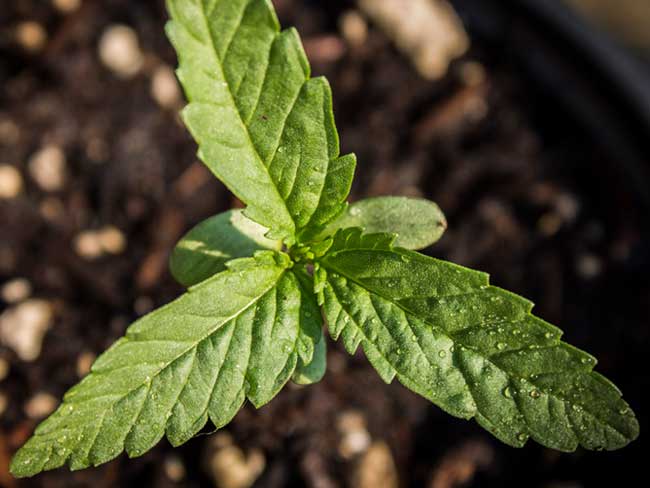
„Bei meinen Keimlingen bildet ein Pflänzchen drei Blätter aus – ist das normal?“ Fragen wie diese werden Grower und Interessierte öfter zu hören bekommen. In der Tat ist Cannabis eine sogenannte Zweikeimblättrige Art. Das heißt, dass die Blätter im frühesten Wuchstadium der Keimung zweifach wachsen. Eine Abweichung davon ist nicht weiter schlimm. Im weiteren Verlauf des Wachstums neigen Dreikeimblättrige Pflanzen außerdem dazu, dieses seltsame Verhalten zu beenden.
Creeping cannabis plants
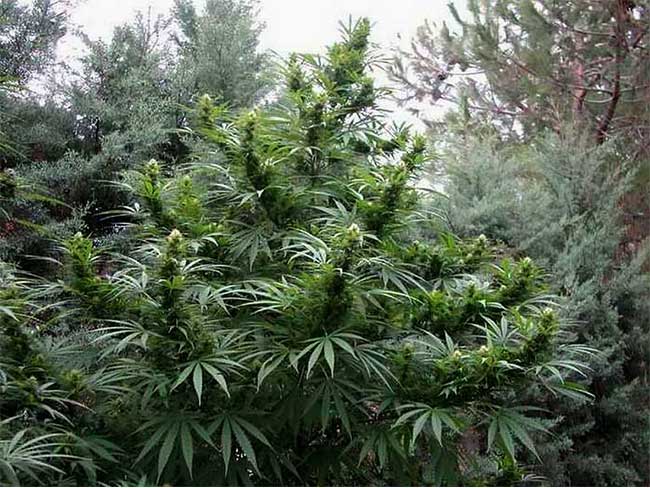
This genetic muation can only be observed very rarely and it only occurs in certain tropical sativas that grow in humid regions and reach an above-average size. In this case, the heavy and flower-laden branches grow towards the ground instead of towards the light. If there is contact with the ground, some branches even develop roots. This change is positive because the plants can absorb more nutrients due to their increased root mass. Creeping cannabis has not yet been commercially developed.
Australian Bastard Cannabis
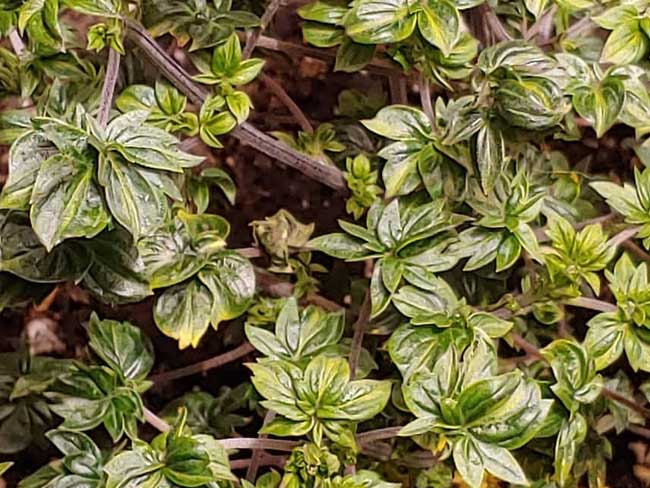
ABC is an Australian invention. This phenomenon first appeared near Sydney in the 1970s. The strange anomaly grows more like an herb than a shrub. The leaves are not serrated, instead they are smooth and shiny and grow no longer than 5cm. The original ABC resembles hemp more and produces few cannabinoids. However, some non-commercial breeders managed to increase the THC content. This mutation caused a sensation about a decade ago. So far, hardly any varieties are available on the market.