
Blog
The anatomy of cannabis
The individual parts and their functions
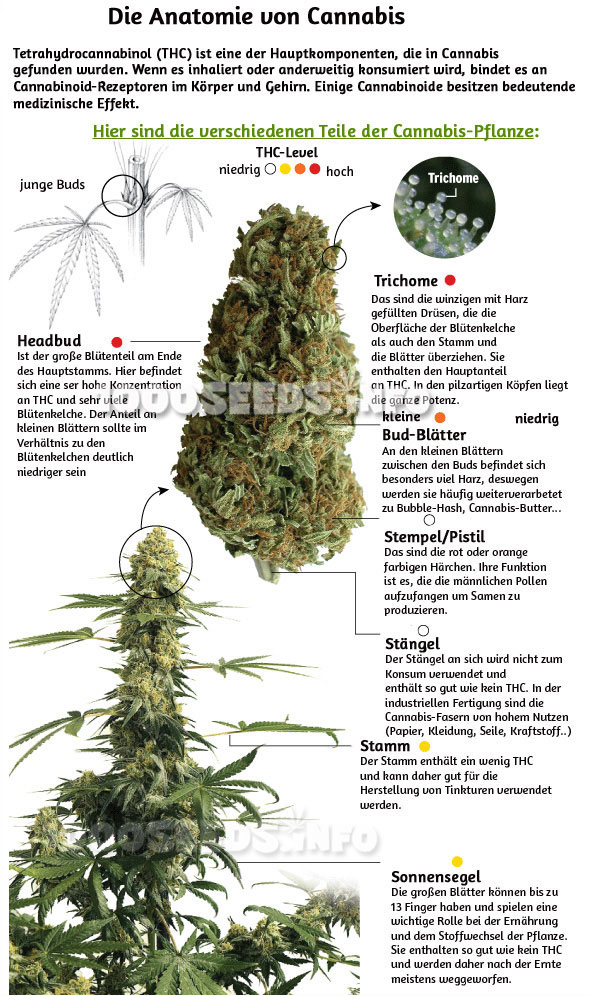
If you take a closer look at a marijuana bud, you will notice that the structure and the composition are relatively complex and consist of different parts. On the one hand, the white or brown-orange hairs on the flower, the sticky, sugary resin, the calyxes wrapped in small leaves... The question is, what are these parts and what are they good for?
male and female cannabis plants
Cannabis plants can be male or female, or in exceptional cases both (-> Hermaphrodite/Hermaphrodite). Cannabis enthusiasts and medical users are mainly interested in the female cannabis flower, which produces the resin, THC and other cannabinoids in particularly high levels, bringing medicinal and psychoactive, relaxing or stimulating effects.
In the wild and without human influence, male plants pollinate female plants and seeds are produced on the female plant. If a female plant has been pollinated by a male one, the latter stops producing resin and from now on concentrates primarily on the formation and development of seeds.
Strong, potent and medicinally effective are the flowers without seeds of unpollinated female cannabis plants. That is why potent weed is also called sinsemilla (span. = without seeds).
Hermaphrodites, plants that have both male and female sex organs, are relatively rare. A hermaphrodite is able to pollinate itself and also other female plants and is therefore extremely disliked in the grow box and usually eliminated early. This is to be distinguished from the short-term appearance of 1-2 male flowers at the very end of the flowering period as an emergency action of the plant that wants to safen its genes.
Feminized seeds are created through special breeding processes and produce 99% female cannabis plants. Clones are genetically identical to their mother from which they were cut and therefore also always become female.
Headbud
By nature, cannabis plants form a large main flower (terminal flower), often called a headbud, at the top of the main stem. Here, densely packed countless individual flowers are formed.
By using different cultivation methods such as LST or topping, you can increase the headbud even more.
Calyxes
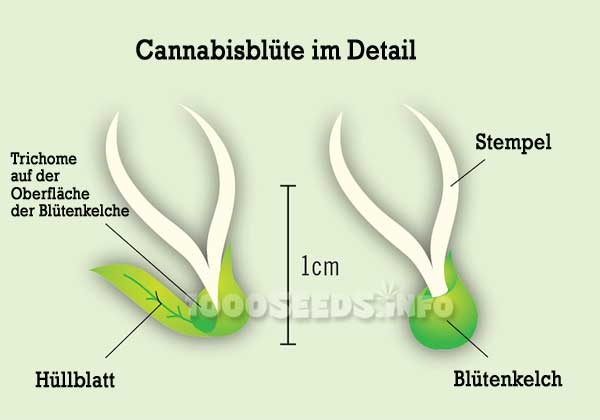
The calyxes, which lie below the tiny, sugary, resinous leaves, are what mainly make up the flower. They are teardrop-shaped and change as the flower develops, becoming increasingly swollen. Depending on the variety, the calyxes may have a slightly different shape or even color. The calyxes contain a very high concentration of resin glands that secrete THC and other cannabinoids.
Stamp
From the calyxes come white later orange/red hairs, the pistils. They serve to capture the male pollen. These hairs or pistils are white at the beginning, white-yellowish (sometimes pinkish) and then turn yellow, orange, then red/red-brown and finally dark brown over time as they mature. The hairs are of great importance for the reproduction of the plant, but have no greater use in terms of taste and effect.
Trichomes
Trichomes are the ones that produce that thick layer of resin on a cannabis flower. The resin is produced by transparent, fungus-shaped resin glands found on the leaves and calyxes.
It is believed that trichomes serve to protect the plant from parasites or other harmful influences. The trichomes produce the aromatic oils called terpenes and also the cannabinoids like THC and CBD.