

Blog
Cannabis cultivation and science
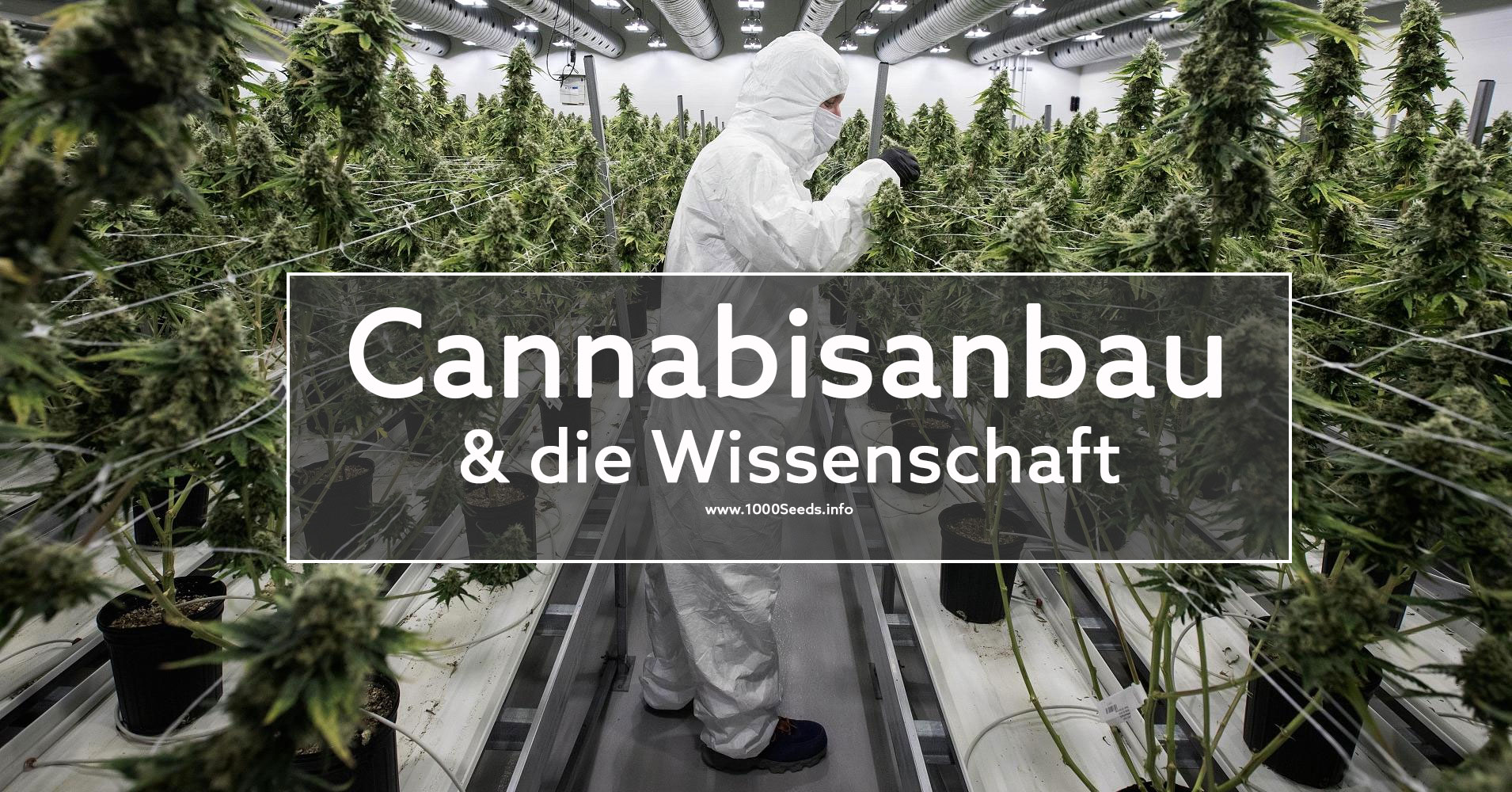
Scientists from the University of Guelph in Canada publish the first "Weedpaper", in which they publish findings about the cultivation of cannabis from a scientific point of view. In many parts of the world, the cultivation of cannabis was and is forbidden, therefore scientific research in this field is almost non-existent. On the other hand, there are incredible and ingenious breeders in the world who have managed to make cannabis more potent to this day and push strains to their absolute limit.
Many growers have contributed immensely to the creation of invaluable and valuable knowledge about cannabis cultivation and have helped to advance this science. As long as cannabis has existed, it has been grown by humans, regardless of whether it was legal or not. You could see the quality of homegrow constantly improving over the last 15 years.
It will be interesting to see to what extent science confirms what many growers may have known for a long time, or if we learn anything new:
In conjunction with the legalization of cannabis in Canada, the demand for scientific knowledge is growing. This has prompted the University of Guelph to conduct research into indoor cannabis cultivation. The Faculty Director of Organic Horticulture explains that Guelph is a leader in research in this area. It has the latest technology and equipment, and for this reason is predestined to offer training for employees in this rapidly growing industry.
Prof. Zhen and Prof. Dixon, along with students, initially focused on researching the ideal substrate and fertilizer. Scientific exploration is about controlling variables to determine with certainty which causes produce which effect. However, Prof. Zhen and his team could not study all the variables that influence cannabis cultivation. This would not have been possible within one project.
The nutrition of cannabis plants
That is why the initial focus should be on the nutrition of the plants. The research team looked for the ideal fertilization rates and the best growth medium for cannabis plants in the vegetative phase. Prof. Zhen and his team explored how the combination of the two factors could affect the concentration of THC in the dried flowers.
Using a liquid organic fertilizer with NPK ratio of 4 - 1.3 - 1.7, the experiment investigated five increasing fertilizer rates. In addition, 2 different coco-based soilless substrates were tested.
At the point the first match was made to knowledge already known for a long time: coco substrates and planting media containing coco have become increasingly popular in recent years. The reason for this is the very good results that many growers achieve with them. The Weed Paper says the same. Coco substrates showed to be particularly suitable for cannabis plants. The two coco substrates studied differed in terms of their water holding capacity. The researchers could not find any differences between lower and higher water storage capacity.
The fertilizer rate
For fertilizer rate, the research team found that the highest yield , cannabinoid content and best plant growth can be achieved with an organic fertilizer rate of 389mg N/L during the growth phase.
This is not really a surprise. After all, cannabis growers have long known that more nitrogen can generally lead to higher yields and potency. Likewise, it is well known that too much nitrogen can even poison and kill the plants.
The researchers tested in the range of 117mg and 585mg N/L. 389mg N/L was found to be the ideal fertilizer rate, which was in the middle range. They also found that an increase to 418mg N/L increased the concentration of THC in the dried flowers, but this was at the expense of the yield and the proportion of other cannabinoids, which leads to a loss of effect.
In further work, the university also plans to look at the lighting and irrigation of cannabis plants. Canada thus occupies a special place in the scientific research of cannabis cultivation. In Canada, the full legalization of cannabis will be implemented next year.
We are excited to see what science will report in the coming years and continue to grow highter according to the motto: Who has the biggest and most potent buds, is right!