

Blog
Plant training methods for greater yields
All about plant training methods and how you can use them to increase yields
In the following article you will learn how to increase the yields of cannabis plants with the help of different training methods. Plant training methods are easy to apply and can increase yields significantly (up to 40%). No additional equipment or accessories are necessary.
But first: What actually is plant training?
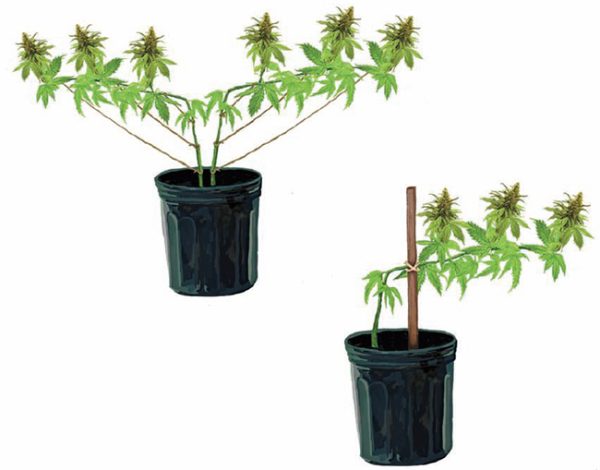
Plant training involves various methods that manipulate the growth of plants so that, for example, more side branches are formed and ultimately higher yields are achieved.
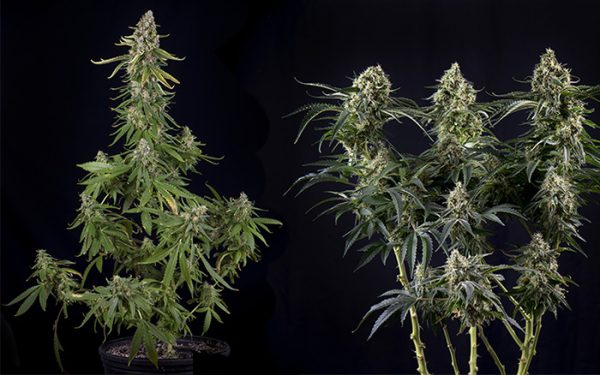
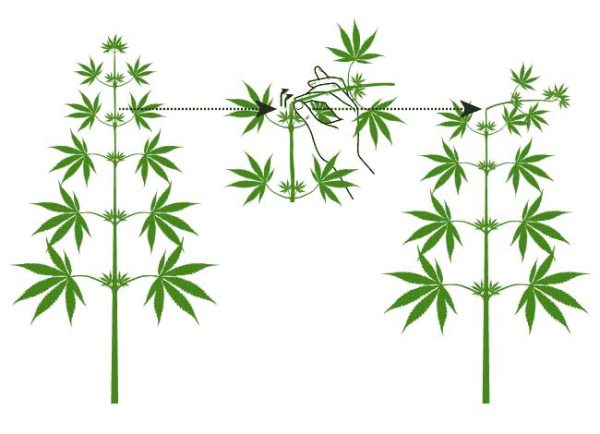
On the left, an untrained cannabis plant; on the right, a trained one.
Untrained cannabis plants form one long and thick headbud, while trained plants can develop several of them. This begs the question, why actually prune a cannabis plant or use certain training methods? Why not just let the plant grow as it does in nature? The question is easily answered: cannabis plants, especially indica dominant strains and many hybrids develop a christmas tree-like growth. This growth habit is optimised for sunlight, but not necessarily for artificial light in indoor growing. The grow light in the grow room does not change its position like the sun and thus does not always provide enough light at the sides of the plant.
Sunlight is much stronger and has a wider colour spectrum than a lamp could ever produce in indoor growing. Sunlight is useful to plants even after it has travelled millions of kill kilometres, whereas the light intensity of a 1000W NDL lamp is only sufficient for a plant 1-2m away.
But even outdoors, flowers that grow further down the plant and receive less light remain smaller than those that are further up and receive direct sunlight. When growing indoors, the sides of the plants are less well lit and for this reason the christmas tree-like growth is rather obstructive indoors. The result is a very large headbud, but also a lot of rather small flowers that did not grow as big as they could have.
The main idea of many plant training methods is to produce several large top flowering stems on one plant so that the overall yield is increased and the available light is best utilised. Different training methods are also used to limit the height and size of the plant. Cannabis plants that are flatter and have a discreet height are often easier to accommodate and hide.
As already mentioned, many growers use Several methods at the same timebecause they complement each other. However, it is also possible to use only one plant training method. Especially with autoflowering cannabis strains, you should use plant training methods sparingly or omit them altogether due to the short life cycle of the automatics. For autoflowering strains, tying down the plants is a good training method that does not cause stress to the plants and does not lead to growth retardation.
Tying down the cannabis plants
Tying down or also Low Stress Training (LST) refers to the process of tying down and fixing the main stem or side branches of the plants. This causes the plant to develop a broader structure and branches that are further down can be better supplied with light. This should be started when the plant is still very young and has a soft flexible trunk.
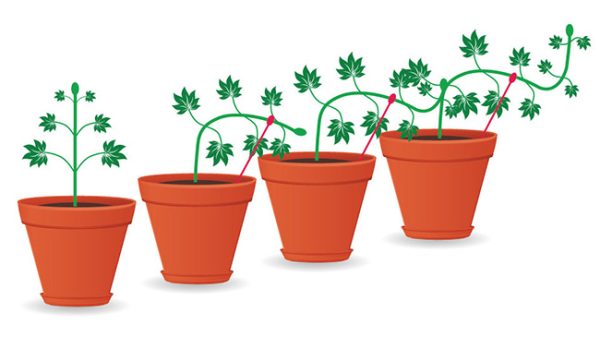
Individual branches can also be tied down and fixed in one position to ensure an optimal supply of light and to avoid branches growing into each other and taking light away from each other. For tying down, a soft, clean and not too thin string should be used, which cannot damage the branches of the plant. If the highest branches are constantly tied down, the result will eventually be a closed green carpet.
Tying down and fixing is best done when the plants are still young and under 30cm tall. At this time the branches are still very flexible and the plant has enough time to readjust its hormone levels.
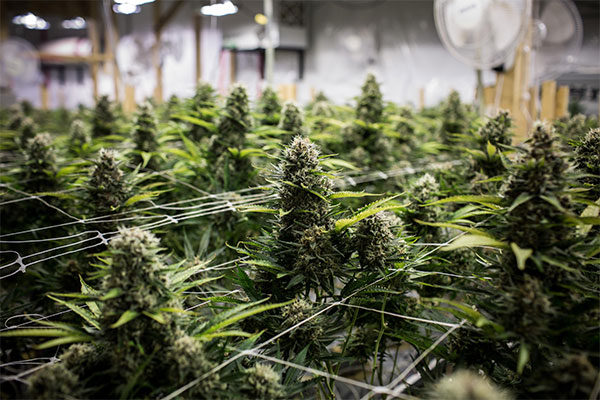
As soon as the flowering starts, the green carpet then turns into a carpet of flowers, with all the flowers the same distance from the light. This scroggin net can be Scroggin net and thus easily achieve a carpet of flowers.
Scrogging
Scroggin uses a plant net to train the plants to grow horizontally. From this horizontal growth, a homogeneous carpet of flowers develops during flowering. The scrogging net is positioned just above the plants. For indicas, the net is placed about 20cm above the planter, for hybrids about 30cm and for large sativas about 50cm above the ground. The plants are then fixed and shaped along this net so that they spread evenly over the growing area. The large leaves are pressed under the net. The scroggin method requires fewer plants than a sea-of-green. When scroggin', always make sure that no branches break when you fix them.
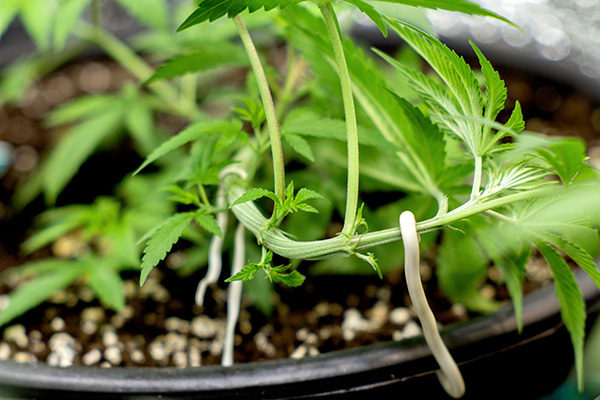
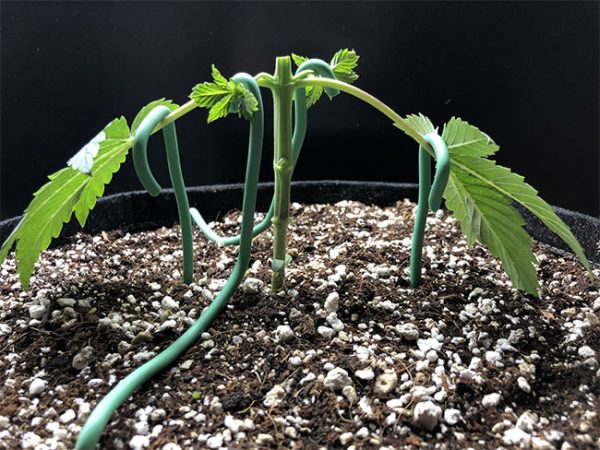
In the picture we see how the main stem of the plant was tied down by 90° when the plant was still very young. The individual branches now grow vertically upwards and can later bear large and potent flowers.
Supper Cropping
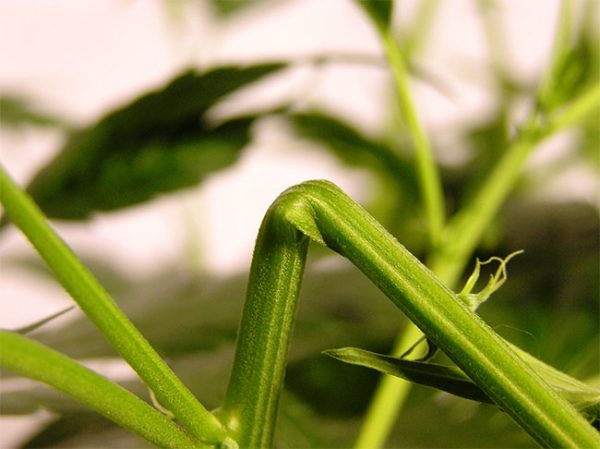
Super Cropping represents a more intensive technique of cropping down. If individual twigs become too thick and have already become woody, it is difficult to simply bend them down and secure them. In super cropping, the branch is first rolled between the fingers and carefully twisted back and forth before being tied down. Super cropping is an excellent technique if your plants get too big and outgrow the lamp. It helps you to control the growth and at the same time it stresses the plant in a positive way and causes these branches to be more supplied. Super cropping is best done during the second or third week of the growing phase. With this method you can achieve a super-bushy growth structure with many "flowering places". However, this can also delay the harvest time by 2 weeks or more.
Plants that have been super-cropped need more growing time to finish the process. The branch to be cropped/bent down is rolled between thumb and forefinger until the plant tissue becomes soft and flexible so that the branch can be bent easily. The branch should not break in the process.
Breaking the plant cell walls causes the plant to repair at that point. The plant will rebuild the tissue stronger than before, which is why this technique can increase the harvest. The stem becomes thicker at the point where it was cropped than before. This allows for a stronger transport of water and nutrients, which directly affects the yield. When you super-crop the main stem, the whole plant benefits. Super-cropping side branches gives you more control over the growth habit of the cannabis plant. Individual branches can be oriented to receive as much light as possible. Because the branch that has been super-cropped becomes stronger and thicker, it can also support more weight.
Pruning cannabis plants
Pruning or pruning of cannabis plants is mainly for the purpose of increasing yields. Pruning increases the number of leaf axils and possible "flowering places". Pruning for more yield differs from trimming so that individual flowers or branches receive more light. If the main stem is pruned, this is automatically called topping. Topping creates several main stems. But more on that a little later...
Every side branch that is pruned forms two new branches again at this point. This is a natural process that can also be observed in the wild. In cannabis plants, the side branches grow from the main stem.
Pruning redirects plant hormones within the plant and affects the cannabis plant more drastically than tying down. Selective pruning and tying down allows us to manipulate the auxin hormone levels in the branches and flowers.
If you are skilled in pruning, you can also turn a big sativa into a small bushy plant that can also grow in small grow rooms. You can't create 2 new side branches from one forever by pruning. Depending on the strain, you may be able to create up to 8 side branches.
Topping
Topping is the process of snipping or cutting off the top of the cannabis plant. This usually happens during the 3rd or 4th week of the growing phase. The main stem develops two new branches in consequnece and forms a V-shape. We will then later have two main stems with flowers instead of just one. With this method up to 6 main stems can be produced. Overall, this method does not always lead to increased yields. However, the amount of flowers a plant can produce is always genetically determined and limited.
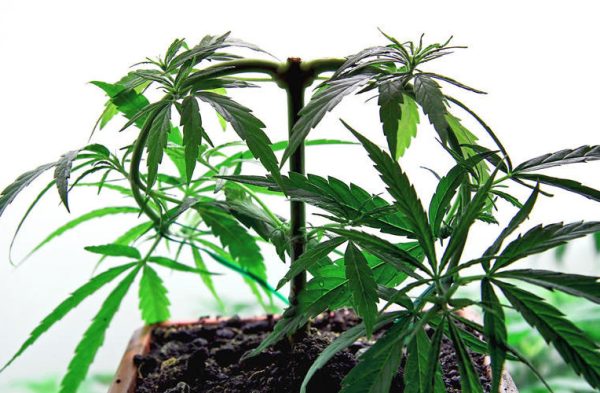
Some varieties only show their full yield when they have been topped, e.g. Blueberry. With other strains it makes less or hardly any difference. Whether topping has a yield-enhancing effect or not depends strongly on the respective cannabis variety.
Pruning and topping should not be done during the flowering phase. During the flowering period, the plants need all their energy to produce potent buds. Pruning should be completed before flowering starts.
FIM technique ("Fuck-I-missed")
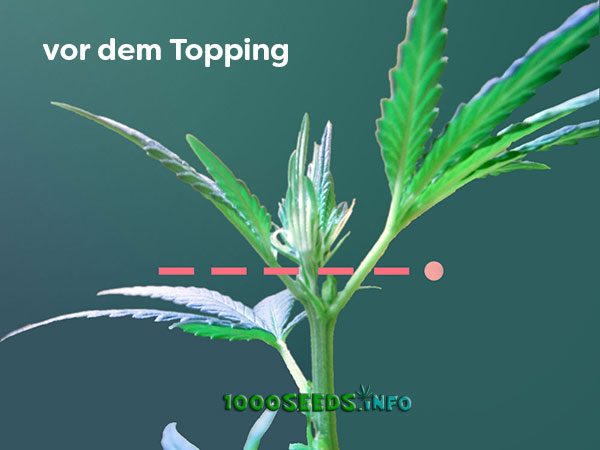
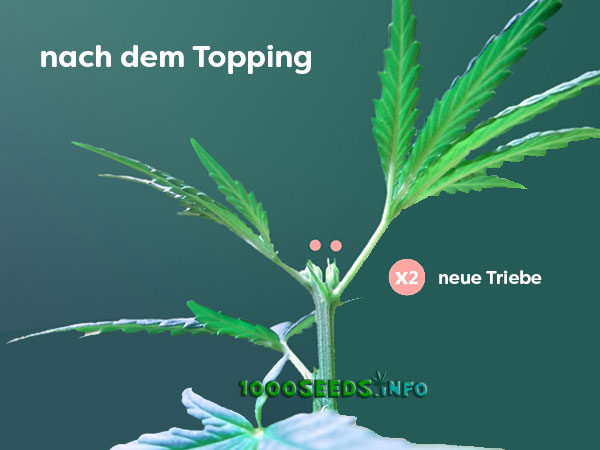
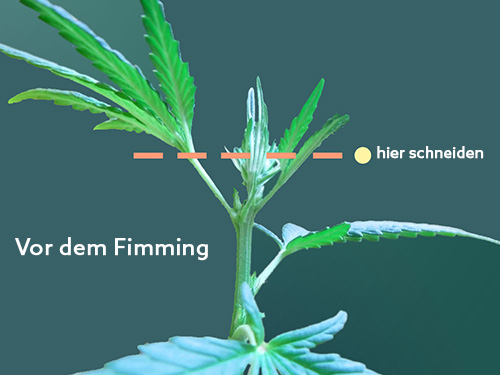
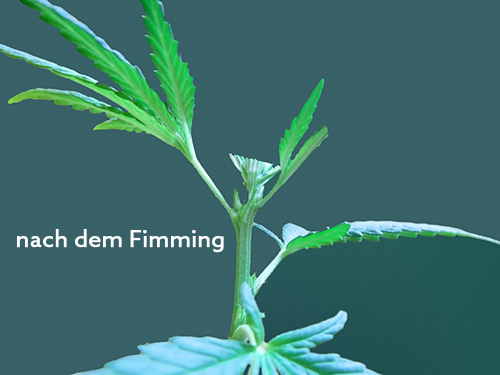
A special topping method is the FIM technique. At the absolute top of the plant is a thickening of new leaves. ¾ of this thickening is cut off with a sterile knife or scissors. This results in several headbuds that form after some time during flowering. One FIM cut can result in up to 8 new headbuds.
Thin out, remove leaves
Some growers remove certain large leaves in the first month of flowering to give the flowers more light. This should be done very carefully and strategically. Large solar sails (large cannabis leaves) are removed so that the flowers can receive more light and grow larger. The growth of cannabis flowers is highly dependent on light. As soon as there is an improvement, you can see the buds getting bigger. As long as the removal of large leaves remains within reason and is not overdone, it can lead to an increase in yield. Large awnings should only be removed from indoor plants and only if the plant is healthy.
Grow a cannabis bush
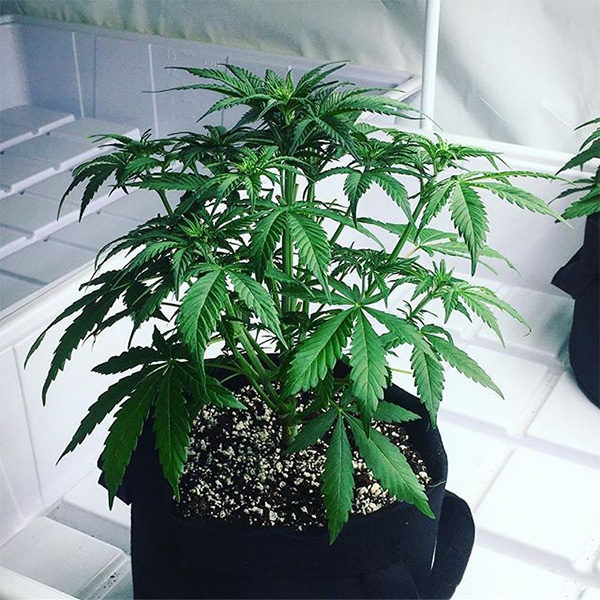
Some growers prefer small and bushy plants, e.g. because they are more discreet. During the third week of the growing phase, the branches are shortened by half. The top bud is also cut off. Note: Cannabis plants need at least 50% of their leaves untouched so that they can continue to grow without major damage. If more than 50% of the leaves are cut off, this can result in the death of the plant.
Now wait until the 4th or 5th week of the growing phase and prune the branches again by 50%. Within the 7th week of the growing season, you can now see the plant growing more outwards and sideways than upwards. To create a cannabis bush you will need a few extra weeks of growing time.
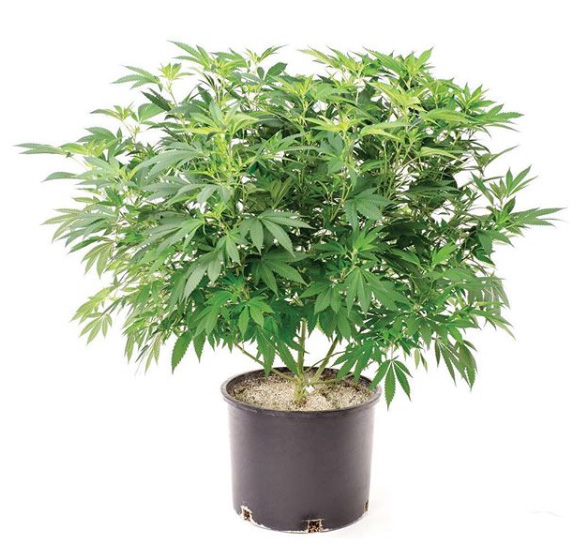
Swazzing
Joshua Haupt, ein professioneller Cannabiszüchter und Unternehmer aus Denver, beschreibt in seinem Buch „Three A Light“ eine besonders intensive und einzigartige Form des Beschneidens von Cannabispflanzen. Bei seiner Methode Swazzing werden Marijuanapflanzen im Verlauf ihrer Entwicklung immer wieder beschnitten und in der Blüte alle Harzblättchen entfernt, so dass jede Blüte einen perfekten Zugang zum Licht hat. Diese Methode kann ohne Probleme tödlich für deine Pflanzen ausgehen, wenn Du dich nicht gut auskennst und so wie Haupt als Ausgleich eine Kombination aus bestimmten und erhöhten Nährstoffen gibst. Diese Methode findet vor allem in hochentwickelten, abgeschlossenen und professionellen Grows Anwendung und verspricht eine deutliche Steigerung der Erträge. Swazzing gehört zu den risikoreichen Pflanzentraingsmethoden, bei denen du zunächst üben und Erfahrungen sammeln solltest bevor du die Methode auf deinem gesamten Grow anwendest.
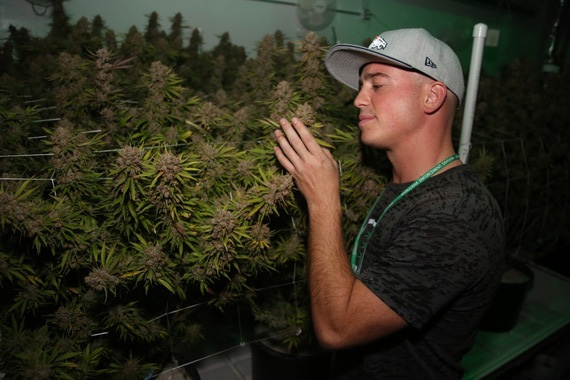
Lollipopping
Lollipopping is a debated method, but one that some growers do with visible success. It involves removing all the lower branches and leaves of the plant, which don't get much light anyway. This gives the cannabis plant more energy for the branches and flowers higher up. Lollipopping is done during the growing phase and should not be done during flowering. Removing lower branches and branches that grow into each other also improves air circulation for the plant.
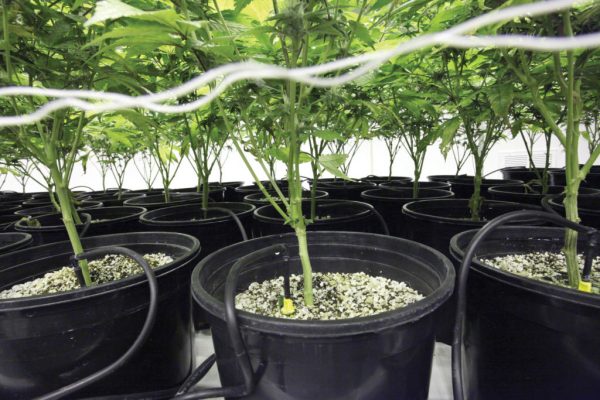
Mainlining technique
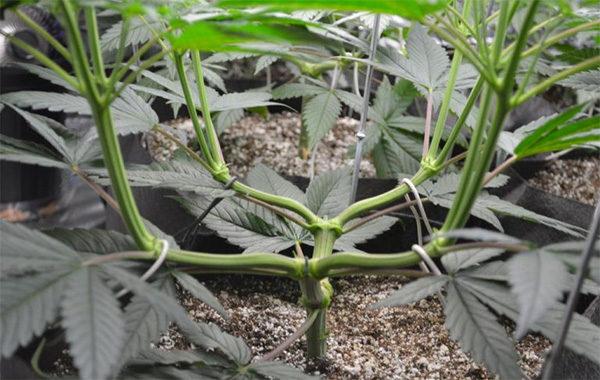
Mainlining (or fluxing) is a popular technique to achieve higher yields. This advanced technique combines different plant training methods to achieve an efficient supply to all flowers and thus higher yields. This technique uses only the main branches of the plant and creates space for an even distribution of energy from the roots to each individual flower. Main-lining is an extremely powerful method for keeping plants completely under control in small spaces, and offers outdoor growers the ability to control the size and shape of their plants to achieve consistent and high yields. Plant training techniques such as lollipopping, topping, tying down, doubling etc. are used.
You have some options as a cannabis grower to control the final size and shape of your plant if you use the right plant training methods and cultivation techniques.
Plant training: avoiding mistakes
Training the plants is easy and free of charge. Indoors, yields can be increased by up to 40% compared to natural plant growth. Plants are forced to produce larger and denser buds instead of many small and airy buds.
As described, (most) plant training methods are done in the growing phase, often in the early growing phase. Training plants can produce impressive results but can also lead to disappointment when unintentional mistakes are made and important information is missing.
This is what you should consider
1. do not train at all
It's true, cannabis plants can produce very good results if they simply take on their natural growth form and are not trained, even indoors. However, the results and yields can be much better if you train your plants.
Plant training can be a very complex thing or very simple. It is up to you to decide what you want to do and what kind of training you use.
2. a branch breaks when bending and tying it down
Young plants are still easy to tie down and have very flexible branches. As the branches grow larger, they become woodier and more rigid. Then it can quickly happen that when trying to tie down a branch or when super cropping, this branch breaks. If the main stem breaks, the damage can potentially be extensive and there can be considerable delays in development. With woody and large branches, it is better to use super cropping carefully for at least 10 seconds rather than just force the branch down. When the branch becomes flexible between your fingers and softer to the touch, it can be bent.
If the main stem breaks far down, it is often possible to make some kind of bandage at the site, using cloth, plaster, tape etc, so that the plant can heal. Over the next 1-2 weeks the cannabis plant and main stem should recover. If the main stem breaks relatively high up on the plant, you don't need to worry about it and you can just let it grow on - as a topped plant. It has happened to the best grower that a fat flower breaks off too early.
3. the cannabis plants are kept too small.
Small plants cannot produce as many or as large flowers as large plants. If you keep your plants smaller than necessary, the yields will also be reduced. The most effective way is to fill the entire growing area well. If a cannabis plant that is too small flowers, there is nothing more you can do to make it a yield wonder, the yields will remain small.
Only send cannabis plants into flower when they are 3 to 4 weeks old. Before that, the plants won't start flowering anyway. If they are switched to flowering too early, the plants will always remain small. However, it is actually worth considering and is used by many successful growers: 6 weeks growing time and only then the changeover to flowering.
4. plants become too big
It makes sense to grow larger plants, but various problems can arise when the cannabis plants overgrow the grow box and start to take over the lamp.
Keep in mind that the height of the cannabis plant can double or even triple during the flowering period. So a grow can quickly get out of control. An overcrowded grow room will not produce more yields, but will mainly encourage the development of powdery mildew, botrytis and other unwanted problems. It is advisable to switch to flowering when the plants have reached half the desired height. Tall plants can be controlled in their height growth with scrogging nets and tying down and directed to grow in width.
5. topping incorrectly or too early
If the plant is topped before it has formed the 3rd to 4th pair of leaves, there will be growth retardation or the plant may die, it should be done with a seedling.
6. mistakes in fastening and tying down
When tying down plants, do not use thin string or wire, which can cut the plant stem over time. When tying down, make sure that all the plants in your grow room are the same height.
7. training for diseased and slow-growing plants
Diseased and slow-growing cannabis plants are more susceptible to stress. Plant training methods such as topping, pruning or super cropping can aggravate the disease and delay healing. Wait until the plant is healthy and strong enough before you start training.
Sick cannabis plants will benefit if the light supply (strength) is reduced for a few days. If the light is too strong for a sick plant, it will be difficult for it to keep up with photosynthesis. So always consider the overall condition of the plant before you start training and take the necessary time to do so.